How to Make a Simple Leather Watch Strap
Make your own leather watch strap from scratch. Learn leather selection, cutting a taper, punching holes, saddle stitching a keeper loop, and fitting hardware.
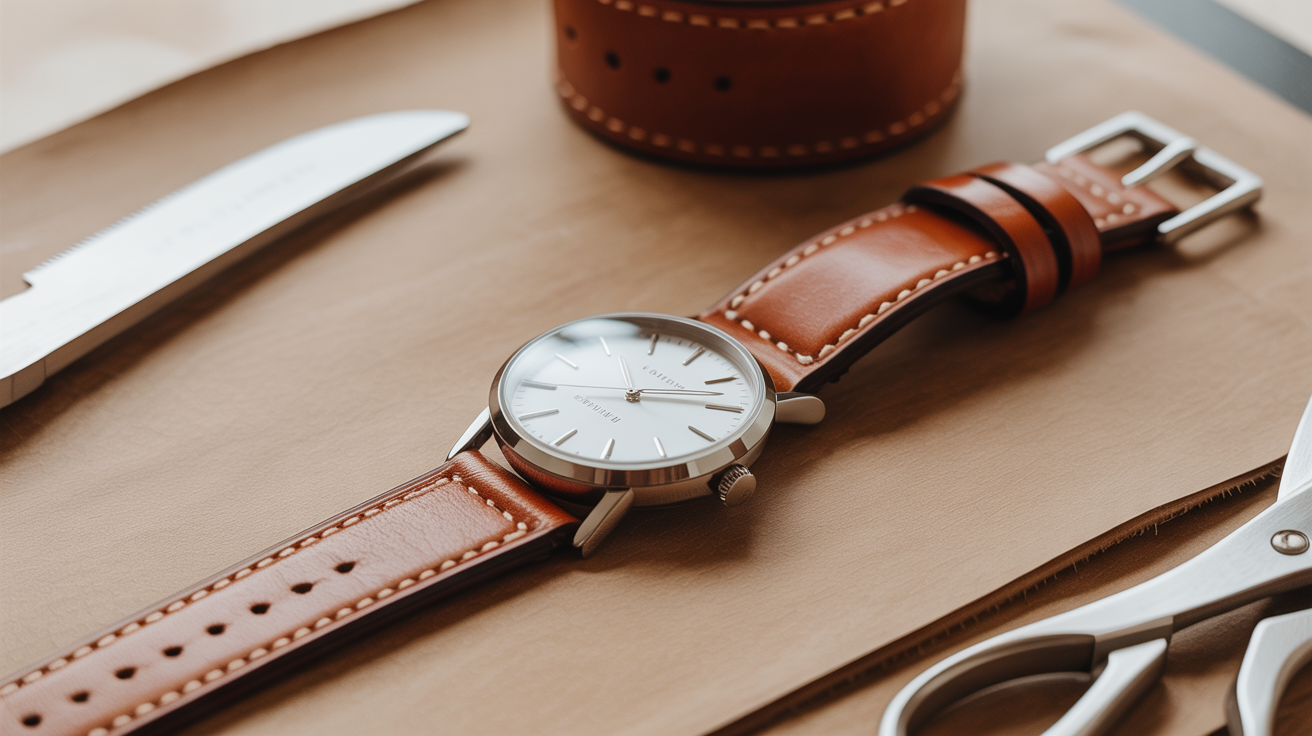
A leather watch strap is one of the best beginner projects you can pick. The leather piece is small, the cuts need to be clean and consistent, and the finished item goes on your wrist every single day. That constant reminder of what you made is genuinely motivating when you're just getting started.
This guide walks you through the full process: choosing the right hide, cutting the long taper, punching evenly spaced holes, saddle stitching a keeper loop, and setting the buckle. Take your time on each step and test on a scrap strip before touching your good leather.
Choosing the Right Leather
The single most important decision is leather weight. For a watch strap you want 2–2.5 mm (4–5 oz) vegetable-tanned cowhide. Thinner than that and the strap goes floppy quickly. Thicker and the tail won't fold cleanly through a standard buckle bar.
Vegetable-tanned leather is the right choice here. It shapes well under pressure, takes dye and edge finish cleanly, and develops a patina over time that chrome-tanned hides won't match. Look for a tight, firm temper rather than a loose, spongy feel.
Width at the lug end must match your watch. Most watches use standard lug widths of 18 mm, 20 mm, or 22 mm. The tail (the end that goes through the buckle) tapers narrower. A 20 mm strap commonly tapers to 16 mm at the buckle end. Cut a scrap strip to width and hold it against the lugs before cutting your real piece. See leather weights and thicknesses explained for beginners for help reading the label numbers at your supplier.
Cutting the Strap
You need two lengths: the long piece (the strap itself) and a short piece for the keeper loop. For a standard adult wrist, a total strap length of about 25–27 cm works before tapering, but measure your own wrist and add 6–8 cm of adjustability.
Tools you'll need for this step:
- A strap cutter or a sharp skiving knife and straight edge
- A cutting mat
- A ruler or wing dividers
Mark the taper line with dividers or a straightedge. The taper usually starts about 8–10 cm from the buckle end. Cut in one smooth pull rather than sawing back and forth. A sawing motion leaves a ragged edge that takes more cleanup. If you're using a knife, press firmly and let the blade do the work. A dull blade will drift.
Round or point the tail end. A simple bullnose point (a half-circle) is the most forgiving shape to cut freehand. Use a coin as a template and score around it lightly before your final cut.
Marking and Punching the Holes
A watch strap needs two sets of holes: the pin holes in the tail (where the buckle pin sits) and the buckle slot at the lug end.
Pin holes: Punch 5 to 7 holes spaced 8–10 mm apart in the center of the tail. Mark the center line first with a silver pen or wing dividers. Consistent spacing matters here because it shows clearly on the finished strap. Work through a piece of scrap first to confirm your punch diameter fits the buckle pin. A 1.5 mm or 2 mm hole is typical for most watch buckles.
Buckle slot: At the lug end, you need an oblong slot for the buckle tongue to sit against. Mark the slot width to match the buckle bar, then punch a round hole at each end and cut the straight sides with a sharp knife. Clean up the corners with a small gouge or the tip of your knife.
For consistent, evenly spaced holes across the strap, the technique in how to mark and punch even stitching holes applies directly here.
Stitching the Keeper Loop
The keeper is the small loop that holds the tail of the strap flat against your wrist. It's usually left unstitched on the outer face and stitched only at one edge so it slides along the strap.
Cut a short piece of leather, about 1.5 cm wide and long enough to wrap around the strap with a small overlap. Skive (thin) the overlap area on both ends so the join sits flush. Fold the loop around a piece of dowel or a spare buckle bar to shape it before stitching.
Saddle stitch the overlap using two needles and waxed linen thread. Run 4–6 stitches through both layers at the join. For a tidy finish, pull each stitch snug but not so hard that the leather puckers. The full technique for keeping your saddle stitch even and tight is in how to hand stitch leather: the saddle stitch explained.
Burnish the cut edges of the keeper with a bone folder or wood slicker and a little water. This prevents the raw edge from roughening against your skin.
Setting the Buckle
Thread the lug end of the strap through the buckle bar, fold it back about 2 cm, and align the buckle slot with the fold. Hold the fold in place and mark two stitch lines on either side of the buckle slot.
Punch your stitching holes along those lines using a pricking iron, spacing them about 3 mm apart. Then saddle stitch both rows to lock the fold down. Some makers rivet through the fold as well for added strength. A single copper rivet centered between the stitch lines is a clean choice if you have a setting kit.
For hardware finish, match the buckle to any other metal your watch already carries. A stainless case pairs with a brushed silver buckle; a brass or gold case works with brass hardware. See buckles, D-rings, and hardware: a beginner's buying guide for what to look for in a solid buckle that won't corrode against your skin.
Edge Finishing and Final Fit
Bevel the long edges of the strap with an edge beveler. A single light pass on the top and bottom of each edge is enough. Then burnish with water and a wood slicker, or use a commercial edge finish like Tokonole.
Check fit before you declare the strap done. Thread it through your watch lugs, fasten the buckle, and let the strap settle for a few minutes. The leather should lie flat, with no twist. If the lug end is slightly too wide, a few careful passes with a knife and a sanding stick clean it up.
Frequently Asked Questions
What weight of leather is best for a watch strap? 2 to 2.5 mm (4 to 5 oz) vegetable-tanned cowhide is the standard starting point. It folds cleanly through hardware, holds its shape on the wrist, and is easy to stitch by hand.
How do I find the right lug width before cutting? Remove your watch's existing strap and measure across the gap at the lug ends with calipers or a metal ruler. Most standard watches use 18 mm, 20 mm, or 22 mm. If you're between sizes, go to the narrower width so the strap fits without forcing.
Do I need a strap cutter or can I use a knife? A strap cutter gives you parallel edges in one pass and is worth buying if you plan to make more than one or two straps. A sharp skiving knife and a metal straight edge work fine, but take more care to keep the cut straight. Test on scrap before cutting your final piece.
How long should the strap be? A total combined length of about 25–27 cm (strap + keeper + buckle fold) suits most adult wrists. Measure the watch you're replacing if you have one, or wrap a tape measure around your wrist and add 6–8 cm for adjustability.
Can I make this project without a pricking iron? You can mark and punch stitching holes with a scratch awl and ruler instead of a pricking iron, as long as you mark all holes before you start punching. The result is less uniform but entirely functional for a first strap. A pricking iron is a worthwhile addition to your kit once you're making more projects regularly.