Buckles, D-Rings, and Hardware: A Beginner's Buying Guide
Learn which leather hardware you actually need, how to choose the right sizes, and where to buy buckles, D-rings, and snaps for your first projects.
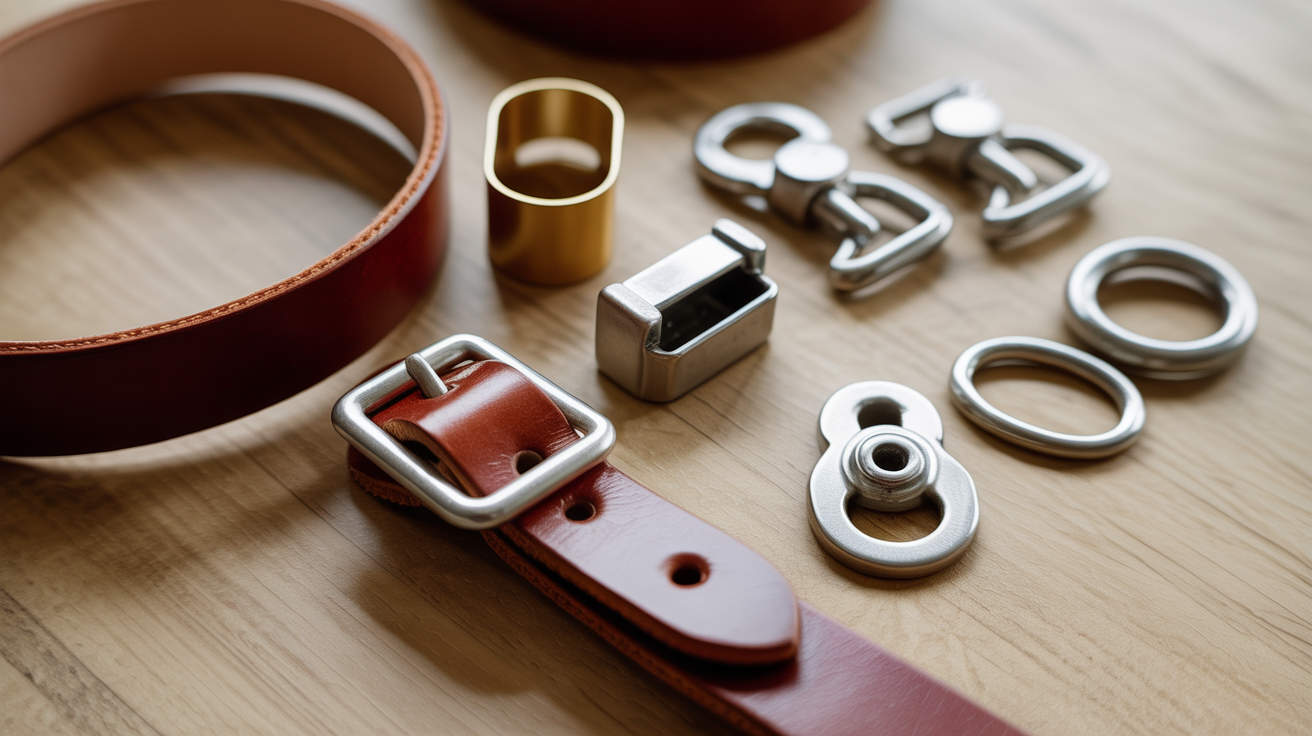
Metal hardware is where a leather project goes from a cut piece of hide to something functional. Buckles close a belt. D-rings anchor a strap. Chicago screws hold layers together without stitching. Getting comfortable with hardware early means you can move from wallets to bags to belts without being held up by a trip to the store mid-project.
This guide covers the most common hardware types, how to size them correctly, what finishes to buy, and where to source good pieces without overspending.
The Main Hardware Types and What They Do
Most beginner projects use a short list of hardware. Learn these and you can build a lot.
Buckles are the fasteners on belts, bags, and straps. They come in frame buckles (a solid bar you thread leather through) and center-bar buckles (a pin sits in a hole punched through the leather). Center-bar buckles are what most people picture when they think "belt buckle." Frame buckles appear on bag closures and watch straps.
D-rings are fixed metal loops shaped like the letter D. One flat side is sewn or riveted in place; the curved side lets a strap slide through or a clip hook on. They handle stress better than other rings for bag straps and leashes.
O-rings are circular and can rotate, which makes them useful for lanyards and light-duty loops where a fixed ring would twist the strap.
Chicago screws (also called screw posts or binding screws) are two-piece fasteners with a male post and a female cap. They thread together to sandwich leather layers, often used on belt keepers and book covers.
Rivets join leather permanently. Double-cap rivets are the most beginner-friendly: a cap on each side, set with a mallet and a small anvil or a rivet setter. Tubular rivets are hollow and slightly fancier but require a specific setting tool.
Snaps (also called press studs or line 20/24 snaps) let you open and close pockets and flaps quickly. They come in several sizes; line 20 is the smallest common size, line 24 is more common on bags and sturdy straps.
How to Choose the Right Size
Leather hardware is sized by the interior width of the opening, which must match your strap width exactly. A buckle sized for 1-inch (25mm) strap will not work cleanly on a 1.5-inch (38mm) strap.
Belt buckles for a standard belt run 1.25 to 1.5 inches wide. Watch strap buckles are typically 18, 20, or 22mm. Dog collars range from 5/8 inch for small breeds to 1.5 inches for large ones.
D-rings and O-rings are also measured by their inner opening. Match this to the strap you plan to run through them. For a 1-inch strap, buy 1-inch D-rings.
Chicago screw length matters more than width. The post length must equal the combined thickness of the layers you are joining, roughly. Too short and it will not close; too long and the joint will be loose. If you are joining two layers of 4oz leather (about 1.6mm each), a 3mm post length is a good start. See leather weights and thicknesses explained for beginners for how to read oz weights and translate them to millimeters.
Rivet sizes are usually described by cap diameter and post length. A 9mm cap rivet with a 9mm post suits two layers of medium-weight leather well.
Metal Finishes: Which One to Choose
Hardware comes in several finishes. The functional properties are similar; the choice is mostly about matching the look of your project.
| Finish | Appearance | Best For |
|---|---|---|
| Brass / antique brass | Warm gold to dark bronze | Classic belts, wallets, vintage-style bags |
| Nickel | Silver, slightly cool | Modern bags, contemporary belts |
| Gunmetal / black | Dark gray to matte black | Casual bags, minimalist projects |
| Copper | Reddish-gold | Decorative accents, rustic projects |
| Stainless steel | Bright silver | High-wear items, outdoor gear |
Mixing finishes on one project looks unintentional. Pick one and stick with it.
Plated finishes (most affordable hardware) can wear through over time on high-friction points like buckle bars. If durability matters, solid brass or stainless hardware costs more but holds its finish for years.
Where to Buy Leather Hardware
You have a few good options depending on how much you need and how quickly you want it.
Leathercraft suppliers (Tandy Leather, Springfield Leather, Rocky Mountain Leather) stock a wide range of hardware in common sizes. Tandy has retail stores if you want to handle pieces before buying. Springfield and Rocky Mountain have strong online selections and ship reliably.
Online hardware specialists like Ohio Travel Bag focus almost entirely on hardware and carry obscure sizes and finishes that general leather suppliers do not stock. If you need something specific, they are worth checking.
Craft stores (Joann, Hobby Lobby) carry basic snaps and some buckles, but the selection is thin and the quality is inconsistent. Fine for testing a size, not ideal for anything you want to last.
Amazon can fill in gaps, but hardware quality varies wildly by seller. Look for listings that specify the metal (solid brass, steel, zinc alloy) rather than just the finish name. Zinc alloy is lighter and less durable than brass or steel.
Local surplus and saddlery shops are worth finding if they exist near you. Hardware intended for harness and saddle work is often heavier and better finished than craft-grade equivalents.
The choice of leather affects which hardware looks right. A stiff vegetable-tanned leather ages well with solid brass. Softer chrome-tanned leather tends to suit lighter hardware. And when you are planning a project, thinking about the hide you start with matters from the beginning; see how to choose your first hide for guidance on matching leather to the project type.
How Much Hardware to Stock as a Beginner
It is easy to over-order hardware early on. A more practical approach is to buy per-project until you know which sizes you reach for regularly.
For a first belt: one center-bar buckle in your strap width, two or three belt keepers (loop hardware), and a handful of rivets.
For a simple tote bag: two D-rings, two swivel snaps (if you want a detachable strap), and four to six rivets for strap attachment points.
Once you find yourself making multiple projects at the same width, buying a pack of ten or twenty D-rings or rivets brings the per-piece cost down significantly.
Frequently Asked Questions
What size buckle do I need for a standard belt? Most adult belts use a 1.25-inch (32mm) or 1.5-inch (38mm) buckle, which matches the strap width cut from the hide. The strap width and buckle interior measurement should be the same number.
Can I use any metal hardware on vegetable-tanned leather? Yes. The leather tannage does not restrict hardware choice. Brass is traditional with veg-tan because both age in a complementary way, but nickel and steel work fine too.
Do I need special tools to set rivets and snaps? A basic rivet setter and a small anvil block handle most double-cap rivets. Snaps usually require a snap setter tool that matches the snap size. These are inexpensive and often sold as a set with the hardware.
What is the difference between a line 20 and line 24 snap? Line numbers refer to the snap diameter. Line 20 snaps measure about 12.5mm across; line 24 are larger at around 15mm. Line 24 is more common on bags and sturdy straps where you want a more secure closure. Line 20 is suitable for lighter pouches and card holders.
Where is the best place to buy hardware in small quantities? Springfield Leather and Rocky Mountain Leather both sell hardware by the piece or in small packs, which is helpful when you only need two or three D-rings for a single project. Ohio Travel Bag is worth bookmarking for less common sizes.