Vegetable-Tanned vs Chrome-Tanned Leather: What's the Difference?
Vegetable tanned vs chrome tanned leather explained: how each is made, what it's good for, and which type beginners should buy first.
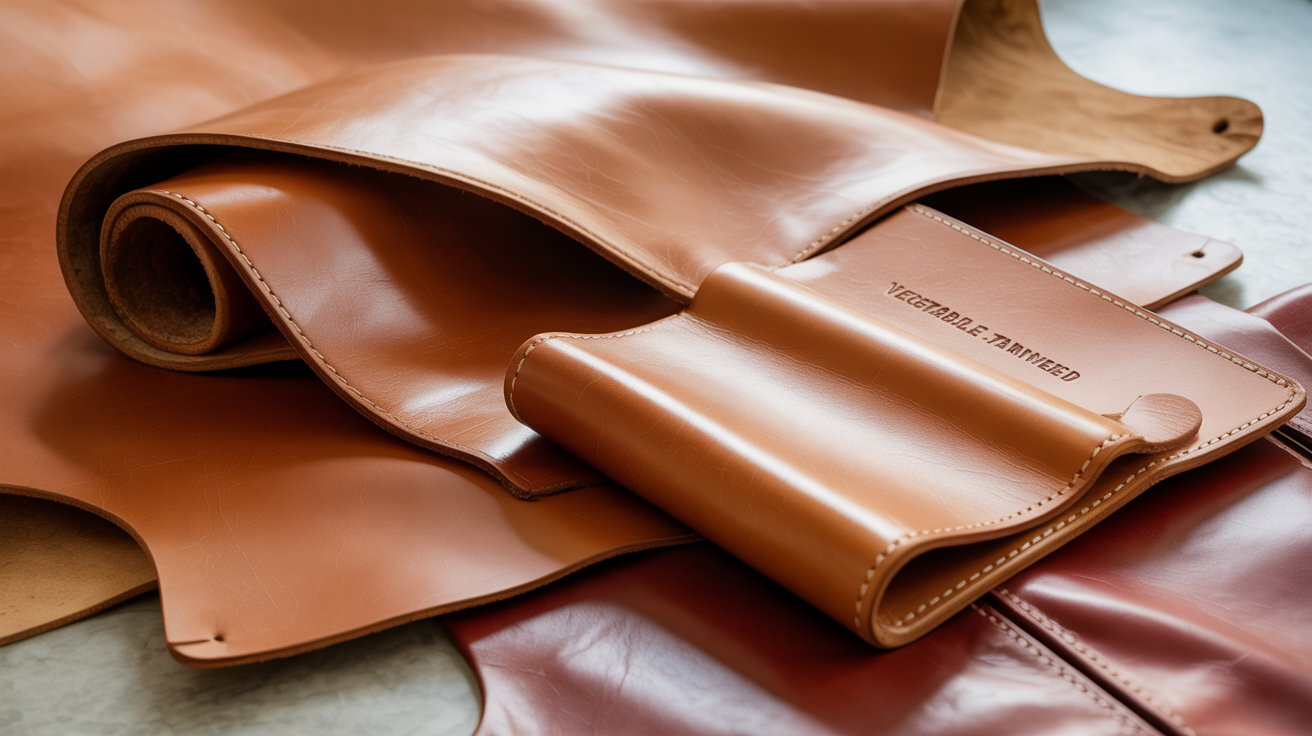
The short answer: vegetable-tanned leather is firm, tool-able, and ages beautifully; chrome-tanned leather is soft, colorfast, and cheaper to produce. Which one you need depends entirely on what you want to make, and for most beginners learning to carve, stamp, or burnish, veg-tan is the place to start.
What "Tanning" Actually Does
Raw animal hide is perishable. Tanning is the chemical process that crosslinks the collagen fibers in the hide, stabilizing them so the material won't rot or stiffen into rawhide. Different tanning agents produce dramatically different leather. Same raw material, completely different end product.
There are dozens of tanning methods, but two dominate the market: vegetable tanning and chrome tanning. A third approach, combination (or oil) tanning, is worth knowing about too.
Vegetable-Tanned Leather
Vegetable tanning uses plant-derived tannins, typically from oak bark, chestnut bark, quebracho wood, or mimosa. Hides are submerged in progressively stronger tannin baths (or packed in pits with bark), a process that traditionally took weeks or months. Modern tanneries have shortened that significantly with rotating drums, but high-quality veg-tan still moves slowly compared to chrome tanning.
The result is a dense, firm leather with a pale, almost natural color. It has very little finish on the surface, which matters a lot for craft work.
Why Veg-Tan Works for Leathercraft
That firm, absorbent surface is what makes veg-tan so useful to work with:
- Tooling and stamping. Wet veg-tan (cased with water) softens temporarily and holds impressions from carving tools, swivel knives, and stamps. Chrome-tanned leather doesn't case the same way; the fibers are too soft and springy to hold a crisp carved line.
- Burnishing edges. Veg-tan's tight fiber structure responds to friction. You can rub a wood or bone burnisher along a beveled edge, and the fibers compress and polish into a smooth, sealed finish. Chrome-tan edges fray and won't burnish; they need edge paint or glue instead.
- Dyeing. Alcohol-based leather dyes penetrate veg-tan deeply and evenly because the surface is open and absorbent. You get rich, consistent color without much prep.
- Patina. Veg-tan darkens and develops character with use, oils from your hands, and UV exposure. A plain, pale belt becomes a rich honey-brown over a few years. Chrome-tan holds its original dyed color more stubbornly.
Veg-tan is the standard for belts, holsters, knife sheaths, watch straps, and anything hand-tooled. It's also used for saddlery and sole leather because of its density and durability under load.
Veg-Tan Drawbacks
It's stiffer, sometimes uncomfortably so for garments or bags that need to drape. It costs more (slower production equals higher price). And it doesn't handle prolonged water exposure well without conditioning; untreated veg-tan can stiffen or stain if it gets soaked and dries out.
Chrome-Tanned Leather
Chrome tanning uses chromium(III) sulfate salts. Hides go into a rotating drum with the chrome solution, and the whole process takes 24 hours or less. It's fast, consistent, and makes up roughly 80–90% of global leather production.
The result is softer and more supple from the start, with better stretch and drape. Chrome-tan also takes dye well during the tanning process itself, producing stable, bright colors that resist fading. It handles moisture better than untreated veg-tan and won't stiffen after getting wet.
Where Chrome-Tan Excels
Chrome-tanned leather is the right choice for:
- Garments and upholstery. The softness and drape that makes it hard to tool with makes it ideal for jackets, gloves, and car seats.
- Bags and wallets. Many everyday leather goods are chrome-tan precisely because they need to flex constantly without cracking.
- Colored fashion goods. The bright, stable dyes possible in chrome tanning are hard to match with veg-tan.
Chrome-Tan Drawbacks for Beginners
Chrome-tan resists the techniques beginners usually want to learn. You can't carve it, you can't burnish the edges, and stamping leaves only faint impressions at best. It also requires edge paint or a trim piece to finish edges (a legitimate technique, but more fiddly than burnishing for most starter projects).
There are also disposal considerations at the tannery end: chromium-containing waste requires careful handling, which is why some crafters prefer veg-tan on environmental grounds.
Quick Comparison
| Feature | Vegetable-Tanned | Chrome-Tanned |
|---|---|---|
| Tanning agent | Plant tannins (bark, wood) | Chromium(III) sulfate |
| Tanning time | Weeks to months (traditional) | ~24 hours |
| Texture | Firm, dense | Soft, supple |
| Tooling / stamping | Yes (cases with water) | No |
| Edge burnishing | Yes | No (needs edge paint) |
| Dye absorption | Excellent (alcohol dyes) | Good (drum-dyed at tannery) |
| Water resistance | Lower (needs conditioning) | Higher |
| Patina with age | Yes, darkens and enriches | Stays closer to original color |
| Typical uses | Belts, holsters, tooled goods, saddlery | Garments, bags, upholstery, wallets |
| Cost | Higher | Lower |
Combination and Oil Tanning
A few leathers don't fit neatly into either category.
Combination-tanned leather starts with a chrome tan, then goes through a retanning step with vegetable tannins. The result sits between the two: softer than pure veg-tan but more tool-friendly than pure chrome-tan. Some bag leathers and pull-up leathers are combination-tanned.
Oil-tanned leather (sometimes called oil-pull-up) is typically chrome- or combination-tanned hide that's heavily impregnated with oils and waxes during processing. Latigo and harness leathers are often made this way. They're durable and water-resistant, with a waxy surface that shows scratch marks as lighter scuffs. You can't carve them, but they burnish reasonably well and are tough enough for outdoor gear.
If you see "pull-up" in a description, it usually means the leather shows finger-marks and scratches as lighter areas that disappear when rubbed. That's a feature, not a flaw.
Which Should a Beginner Buy?
For anyone learning foundational leathercraft, stitching, tooling, carving, and burnishing, buy vegetable-tanned leather first.
The reason is straightforward: veg-tan lets you practice the most skills. You can mark it with a wing divider, cut it cleanly, bevel the edges, and burnish them to a polish. You can carve patterns into it or stamp it. You can apply alcohol dye and see exactly what's happening. The leather responds visibly to what you do.
Chrome-tan does have a place in a beginner's workshop — if your first project is a simple wallet or a snap pouch that doesn't need tooled decoration, chrome-tan is fine and will cost less. But if you want to understand how leather actually behaves under a tool, veg-tan teaches you more per hour of practice.
Start with a 3–4 oz (roughly 1.2–1.6 mm) veg-tan side or shoulder for most starter projects. See how to choose your first hide for a breakdown of the different cuts and what they're suited to, and leather weights and thicknesses explained if the ounce system is new to you.
FAQ
Can you burnish chrome-tanned leather?
Not with a wood or bone burnisher the way you would veg-tan. Chrome-tan fibers are too soft and open to compress into a smooth finish. Edge paint (also called edge coat) or a leather glue sealer is the standard finish for chrome-tan edges. Some crafters bevel the edge, sand it lightly, and apply two or three thin coats of edge paint for a clean result.
Is vegetable-tanned leather more durable than chrome-tanned?
It depends on the application. Veg-tan's density makes it excellent for items that take hard wear: a belt under a buckle, a knife sheath, anything that needs to resist deformation. Chrome-tan is more resistant to water and stays supple in flex points, so it outlasts veg-tan in applications like jacket shoulders that bend thousands of times. Neither is universally tougher.
Why does veg-tan cost more?
Mostly time. A quality pit-tanned veg-tan hide can take 6–12 months to process. Even drum-tanned veg-tan takes 4–8 weeks. Chrome tanning takes a day. That slower process means more labor, more facility overhead, and higher raw material cost per unit of output.
Can I use veg-tan for a wallet?
Yes, but choose a thin weight: 2–3 oz (about 0.8–1.2 mm). Standard tooling-weight veg-tan at 4–5 oz is too stiff for a wallet that needs to fold flat. Some crafters skive thicker veg-tan down to wallet thickness, but buying the right weight from the start is easier. See how to set rivets in leather without wrecking them if you're building a card wallet with rivet closures.
What does "full-grain" mean — is that the same as veg-tan?
No, these describe different things. "Full-grain" refers to the surface layer of the hide, which retains the original grain pattern. "Top-grain" means the surface has been sanded or buffed. "Split" refers to the lower layer separated from the grain. These terms describe where in the hide the leather comes from, not how it was tanned. You can buy full-grain veg-tan or full-grain chrome-tan; the best versions of both types are full-grain.