Leather Weights and Thicknesses Explained for Beginners
A beginner's leather weight chart covering oz to mm conversions, what thickness suits each project, and how weight affects stitching and skiving.
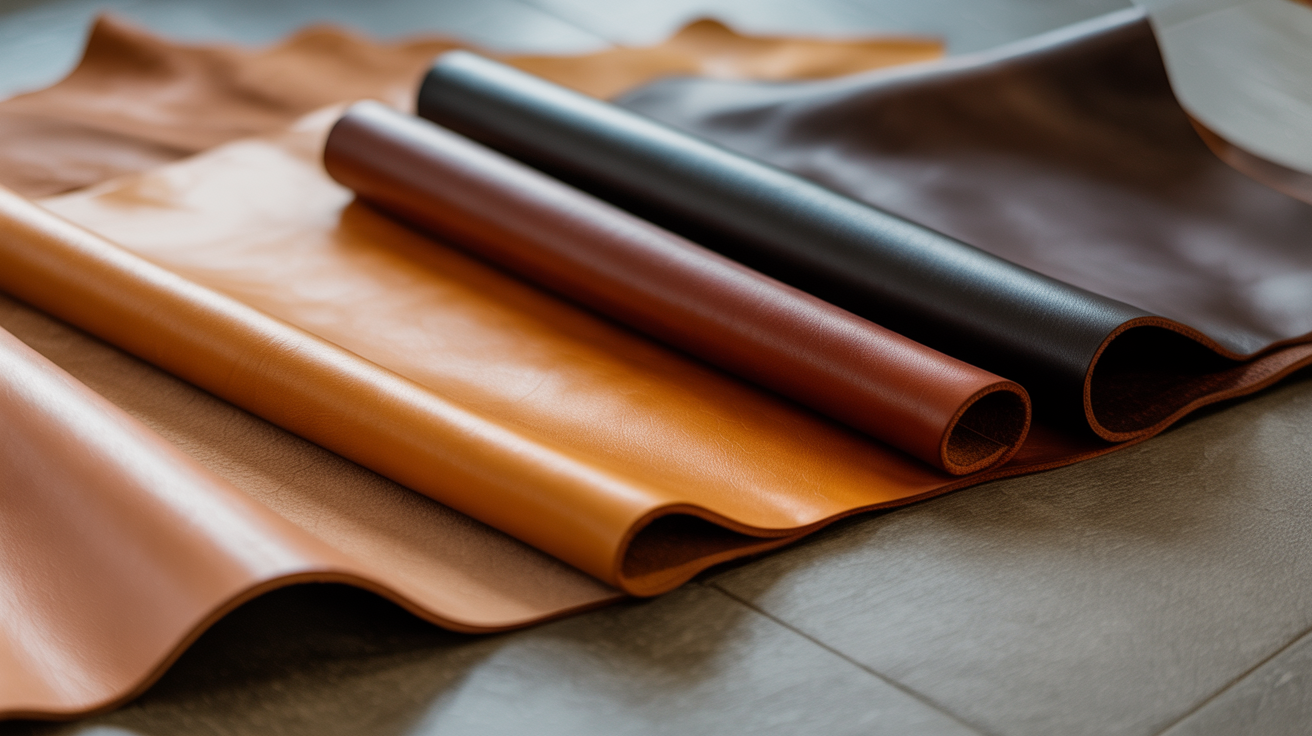
Leather is sold by weight in the US, and that single number (4 oz, 8 oz, 12 oz) tells you almost everything about how a hide will behave under your tools. Once you understand what that number actually means, buying leather stops feeling like guesswork.
What "Ounces" Actually Means
The weight system is old but logical. One ounce of leather equals 1/64 of an inch in thickness, or roughly 0.4 mm. So a 4 oz hide is 4/64" (about 1.6 mm), and an 8 oz hide is 8/64" (about 3.2 mm).
The system comes from the historical practice of weighing leather by the square foot. Heavier leather is thicker, so the ounce figure correlates directly with thickness. Most American suppliers still use it, while European and Asian suppliers typically label hides in millimeters. When you're shopping across both, knowing the conversion prevents expensive mistakes.
A quick conversion rule: multiply ounces by 0.4 to get millimeters, or divide millimeters by 0.4 to get ounces. It's not exact, since hides are natural materials and thickness varies across a single hide, but it's close enough for project planning.
The Leather Weight Chart
This table covers the most common weight ranges you'll encounter as a beginner. The inch and mm figures are approximate midpoints; real hides vary by a fraction on either side.
| Weight (oz) | Thickness (mm) | Thickness (inches) | Typical Uses |
|---|---|---|---|
| 1–2 oz | 0.4–0.8 mm | 1/64–2/64" | Linings, thin interiors, appliqué |
| 2–3 oz | 0.8–1.2 mm | 2/64–3/64" | Small goods interiors, garment leather |
| 3–4 oz | 1.2–1.6 mm | 3/64–4/64" | Card holders, thin bifold wallets, light bag panels |
| 4–5 oz | 1.6–2.0 mm | 4/64–5/64" | Wallets, notebook covers, small pouches |
| 5–6 oz | 2.0–2.4 mm | 5/64–6/64" | Tote bags, messenger bags, medium straps |
| 7–8 oz | 2.8–3.2 mm | 7/64–8/64" | Boot uppers, sturdy bag bodies, wide straps |
| 8–10 oz | 3.2–4.0 mm | 8/64–10/64" | Belts, holsters, watch straps |
| 10–12 oz | 4.0–4.8 mm | 10/64–12/64" | Heavy straps, saddlery, tool rolls |
| 12 oz+ | 4.8 mm+ | 12/64"+ | Soles, saddle trees, heavy-duty work |
Most beginner projects fall in the 3–8 oz range. If a supplier describes a hide as "3–4 oz," expect the actual hide to land somewhere in that window, not uniformly across every square inch.
Choosing the Right Weight for Your Project
Wallets and Card Holders
For a flat bifold wallet, 3–4 oz works well for the exterior panels. Use 2–3 oz for interior card slots; stacking several layers of 4 oz leather makes a wallet that won't close properly. If you're building a card holder with a single folded panel, 4 oz gives structure without being stiff. For slim cardholders designed to sit flat in a pocket, some makers use 2 oz veg-tan on the back panel and 1.5–2 oz on the slots.
Bags
Bags live or die on panel rigidity. A shoulder bag that flops open looks unprofessional and wears unevenly. For a structured tote, 5–6 oz is the sweet spot: stiff enough to hold shape when loaded, light enough to stay manageable over a full day. Messenger bags and satchels benefit from similar weights. You can go lighter on back panels if you're adding a cardboard or Bontex stiffener, but for full-leather construction, don't go below 4 oz on a bag body.
Belts
Belts take constant lateral stress, so thickness matters more here than anywhere else. A dress belt can work at 8 oz, but a work belt or gun belt needs 10 oz minimum. Many belt makers laminate two layers of 5–6 oz leather back-to-back, which gives rigidity without the cost of a single thick cut. Check the how to set rivets in leather without wrecking them guide before you build a riveted belt, since punching through 10 oz requires the right setter size and technique.
Straps and Handles
Camera straps, bag handles, and key fobs each have different load requirements. A padded camera strap stitched over a core can use 3–4 oz outer leather. A raw dog collar needs 7–8 oz minimum; a leash handle, 8–10 oz. Key fobs are low-stress: 3–4 oz works fine and lets you punch clean holes without fighting the leather.
How Weight Affects Your Technique
Stitching
Thicker leather requires larger, stronger needles and heavier thread. At 4 oz you can use a standard linen or polyester thread at 0.8 mm diameter and a size 4 harness needle. At 8 oz you'll want 1.0 mm thread and a size 2 needle. Punching stitch holes is also harder — a stitching chisel that breezes through 4 oz will need mallet force at 8 oz, and the hole spacing may need adjustment so the thread doesn't bunch.
Saddle stitching through multiple layers multiplies effective thickness. Two panels of 4 oz equals 8 oz total, so factor that in when choosing thread and needles before you start punching.
Skiving
Skiving is the process of thinning the leather at edges or fold lines, and it becomes more important as weight increases. At 2–3 oz you can often fold without skiving. At 4–5 oz, skiving the fold line down by half before creasing prevents cracking and produces a cleaner edge. At 8 oz and above, skiving is non-negotiable for any fold or turned edge. A sharp skiver on veg-tan is manageable; on chrome-tan, the fibers can be more irregular and tear if the blade isn't razor-sharp.
Folding and Bending
Veg-tan leather at 4–5 oz folds cleanly over a bone folder or creaser after light dampening. Chrome-tan at the same weight is more elastic but doesn't hold a crease as sharply — it's better suited to bags and garments than precise-edge wallets. See the vegetable-tanned vs chrome-tanned leather guide for a fuller breakdown of how tanning affects behavior.
At 8 oz and above, folding usually requires case-dampening: wetting the leather thoroughly, folding it, and letting it dry in position. Trying to force a dry fold in heavy leather risks a permanent crack along the bend.
Reading Supplier Listings
Not all suppliers describe leather the same way. Some list a single weight (e.g., "4 oz"), which typically means a shaved, consistent cut. Others list a range ("3–4 oz") indicating the natural variation of a full hide. Some European suppliers list only millimeters, so remember to divide by 0.4 to get the ounce equivalent.
Watch out for "garment weight" or "upholstery weight" descriptions that skip the ounce figure entirely. These are usually 1–3 oz leathers sold for applications where exact thickness matters less. They're rarely suitable for structured leatherwork.
When you buy a full hide or a large shoulder, thickness varies: the center back tends to be the thickest and most consistent, while belly sections run thinner and looser. If you need consistent thickness for a project (belt blanks, for example), specify where on the hide you want the cut, or buy pre-cut straps sold by weight. The guide to choosing your first hide covers this in more detail.
FAQ
What weight leather should I use for a beginner wallet project?
For a first bifold wallet, 4 oz veg-tan is the most forgiving choice. It folds cleanly, punches easily, and takes dye and finish well. Cut the card slots from 2–3 oz so the finished wallet doesn't bulk out. Avoid going above 5 oz for exterior panels until you're comfortable with skiving.
Is 2 oz leather too thin to stitch?
It depends on the application. Two oz leather is fine as a lining or interior layer, but it's too fragile as a standalone exterior and will tear around stitch holes under stress. If you need a very thin piece on the outside of a project, laminate it to a 2–3 oz backing before stitching.
Can I use the same leather weight for bags and belts?
Not really. Bags need 5–6 oz for structure but flexibility; belts need 8–10 oz for rigidity and durability under daily lateral tension. Using 5 oz leather for a belt that gets regular use will result in the belt curling and stretching within months.
Why do some suppliers use mm and others use ounces?
It's a regional convention. American suppliers inherited the ounce system from traditional saddlery and have mostly kept it. Most European and Japanese suppliers use millimeters. The conversion is straightforward: 1 oz = 0.4 mm. Both systems describe the same physical property; they just count it differently.
What's the thickest leather I can saddle-stitch by hand?
Most experienced hand-stitchers work comfortably up to about 10–12 oz total stack thickness. Above that, getting needles through pre-punched holes requires significant force and risks bending or breaking needles. At 14 oz and above, many makers use a drill press or mechanical punch rather than a stitching chisel, or they switch to rivets for structural joins.