What Thread to Use for Hand-Stitching Leather
Choosing the best thread for leather stitching: linen vs polyester vs nylon, waxed vs unwaxed, size charts, and how much to cut per seam.
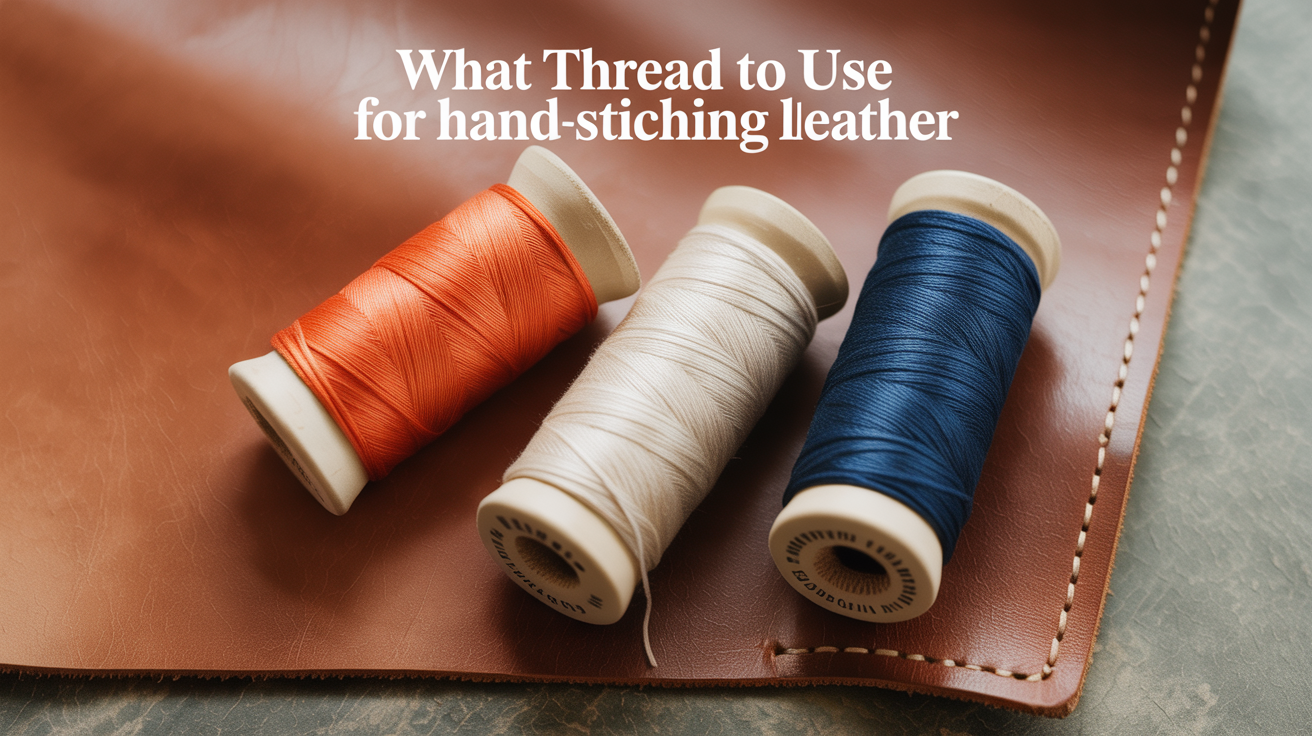
The short answer: for most beginners, a pre-waxed polyester thread in 0.8mm is the single most versatile starting choice. It's strong, consistent, doesn't rot, comes in dozens of colors, and skips the extra step of hand-waxing. But understanding why this is, and knowing when linen or nylon makes more sense, will save you from frustrating seam failures or mismatched holes.
The Three Main Thread Materials
Linen Thread (Barbour and Similar)
Linen thread has been used in saddle-making and bookbinding for centuries, and it earns that history. It's made from flax fibers, which grip wax exceptionally well and lock into the saddle stitch almost mechanically. Barbour's linen is the most commonly cited brand; you'll also find unbranded Irish or French linen from specialist suppliers.
Linen is typically sold unwaxed, which means you'll need to run it across a block of beeswax or a commercially blended harness maker's wax before use. This adds friction that helps the thread behave during stitching: it feeds through holes smoothly, doesn't tangle badly, and lies flat when pulled tight.
The downside is consistency. Linen threads can have thin spots or knot-prone sections within a single strand, which matters less for an experienced stitcher who can feel the tension shift and compensate. For a beginner, polyester is more forgiving.
Polyester Thread (Tiger/Ritza 25, Fil Au Chinois)
Ritza 25 (sold under the Tiger Thread name in some markets) is the most popular leather thread in beginner forums for good reason. It's a flat, braided polyester thread that lays into the groove of a saddle stitch beautifully and comes pre-waxed from the factory. The flat cross-section means threads crossing inside the hole compress flush rather than bunching.
Fil Au Chinois Lin Cable is another braided polyester thread with a similar reputation. Both are strong, UV-stable, and don't absorb moisture. They won't rot in a bag that gets rained on or develop mildew in humid storage.
Polyester thread is available in a range of exact millimeter sizes (see the table below), which makes it easy to match a thread diameter to a specific pricking iron spacing.
Nylon Thread (Vinymo, Sewing Nylon)
Nylon is strong and stretchy. That stretch is useful in upholstery or any application where seams need to flex repeatedly without snapping. It's less popular for small goods (wallets, bags) because the elasticity makes it harder to pull a consistent tension saddle stitch by hand. The thread wants to spring back.
Nylon threads also tend to be round rather than flat, so they sit slightly higher in the stitch holes. This is fine for many uses but can look less refined on fine leatherwork where you want a flush surface. If you're making a motorcycle seat or upholstering something that lives outdoors, nylon is worth considering.
Waxed vs Unwaxed: Does It Matter?
It matters, but probably not as much as thread selection forums suggest.
Wax serves two practical purposes: it reduces friction as the thread feeds through tight holes, and it helps the thread stick to itself so the stitch "locks" and resists unraveling if one section is cut. Beeswax is the traditional choice; synthetic blends (like Seiwa Thread Wax) are more consistent.
Pre-waxed thread (Ritza 25, Fil Au Chinois) handles this for you. The wax is worked into the braid at the factory, which is why these threads are slightly stiffer than raw alternatives. They're convenient for beginners and the wax level is appropriate for most hand-stitching.
If you buy unwaxed linen or unwaxed polyester, a single pass across a wax block before you cut your working length is enough. You don't need to cake it; a light coat is sufficient. Over-waxed thread leaves waxy residue in the holes and on the leather surface, which can cause problems if you're finishing the seam afterward.
Thread Size: Matching Diameter to Your Project
Thread diameter is measured in millimeters and directly affects how your stitching looks. Too thin for a large project and the thread disappears visually; too thick and it won't fit through the holes your pricking iron makes.
Pricking irons and stitching chisels are sold by SPI (stitches per inch) or the gap between tines in millimeters, commonly 3mm, 3.5mm, 4mm, or 5mm spacing. The rule of thumb: your thread diameter should be roughly one-third to one-half of the hole spacing. A 3mm-spaced iron works well with 0.6–0.8mm thread; a 5mm-spaced iron has more room for 1.0mm.
| Thread Size | Hole Spacing (SPI/mm) | Typical Projects |
|---|---|---|
| 0.6mm | 3mm / 8–9 SPI | Card holders, fine wallets, thin veg-tan |
| 0.8mm | 3.5–4mm / 6–7 SPI | Wallets, small bags, belts up to 25mm wide |
| 1.0mm | 4–5mm / 5–6 SPI | Belts, full-size bags, journal covers |
| 1.2mm+ | 5–6mm / 4–5 SPI | Dog collars, saddlery, heavy straps |
When in doubt, start with 0.8mm. It covers a wide range, fits the most common iron spacings, and is proportional for the projects beginners typically attempt first (wallets, key fobs, small pouches).
See Pricking Irons vs Stitching Chisels: What to Buy First for more on matching your iron spacing to the leather weight you're working with.
How Much Thread to Cut
The standard starting formula: cut a length equal to four times the seam length, then add 20cm (about 8 inches) for threading both needles and finishing knots.
For a 15cm (6-inch) seam, that's 60cm plus 20cm = 80cm working length. In practice, most leathercrafters cut 90–100cm for a short seam so they're not scrambling at the end.
This 4x formula assumes saddle stitching, where one needle passes from each side and the thread crosses in the center of each hole. If your leather is very thick (3mm+), the thread travels further per stitch and the ratio creeps toward 4.5x. Better to waste a few centimeters of thread than run short mid-seam. Joining thread mid-seam is possible but always visible on close inspection.
Read How to Hand-Stitch Leather: The Saddle Stitch Explained for the full technique, including how to lock off the thread ends without a bulky knot.
Choosing a Color
Natural (undyed cream/off-white) and black are the two most practical starting colors. Natural thread on veg-tan leather ages with the leather over time. Both darken together, so the seam never looks out of place. Black thread on black or dark-dyed leather disappears cleanly.
White thread on dark leather is a deliberate contrast choice used in boot-making and heritage goods. It reads as a design statement and there's nothing wrong with it, but the contrast makes any stitch tension inconsistency very obvious. Practice on scrap first.
Thread colors are described inconsistently across brands. What Ritza calls "natural" and what Fil Au Chinois calls "ecru" are similar but not identical. If you're matching thread to an existing seam, order samples before committing to a large spool.
A Note on Thread for Machinery vs Hand Stitching
If you're hand-stitching, avoid standard sewing machine thread. It's too thin, often untreated, and lacks the abrasion resistance of purpose-made leather thread. It will also tangle constantly with two-needle saddle stitching because it's too limp to hold a path through the hole.
Conversely, harness-weight thread (1.5mm+) looks proportionate only on thick bridle leather or strap work. On a 1–2mm wallet, it'll overwhelm the project visually and may not fit through holes made with a standard chisel.
For more on preparing leather before stitching, including marking stitch lines and keeping cuts clean, see How to Cut Leather Cleanly: A Beginner's Guide.
FAQ
Can I use regular thread from a fabric store for leather?
Not recommended. Standard sewing thread (polyester or cotton) is much thinner than leather thread, lacks wax treatment, and will fray quickly under the abrasion of moving through leather fibers. It's also too limp for two-needle saddle stitching. Purpose-made leather thread costs a few dollars more but lasts the life of the project.
What's the difference between Tiger Thread and Ritza 25?
They're the same product. Ritza 25 is the manufacturer's name; Tiger Thread is a trade name used by some retailers. Both refer to the flat, braided, pre-waxed polyester thread made by William Gee. If you see both listed at a supplier, check the color codes; they use the same numbering system.
Do I need to wax pre-waxed thread again before using it?
No. Pre-waxed threads like Ritza 25 are ready to use from the spool. If you find the thread is pulling roughly through tight holes or tangling, an optional pass over a wax block can help, but it's rarely necessary with freshly opened thread. Old thread that's been stored in a dry environment for a year or more may benefit from a light re-wax.
How do I stop thread from twisting while I stitch?
With round thread (nylon, some linens), twist accumulates as you work and causes uneven tension. Two fixes: use flat braided thread (Ritza 25, Fil Au Chinois), which is less prone to twisting; or periodically let your needle hang freely and the thread unwind itself. Most experienced stitchers spin the needle slightly in the opposite direction of the twist every 10–15 stitches as a habit.
Which thread is best for outdoor or water-exposed projects?
Polyester. It doesn't absorb water, won't rot, and is UV-stable. Linen is organic and can break down over time when exposed to prolonged moisture. For gear like dog leashes, camera straps, or marine leather goods, stick with a pre-waxed polyester in 0.8–1.0mm depending on the leather thickness.