How to Make a Leather Belt from Scratch
Learn how to make a leather belt by hand with this step-by-step beginner guide covering materials, cutting, punching, and finishing.
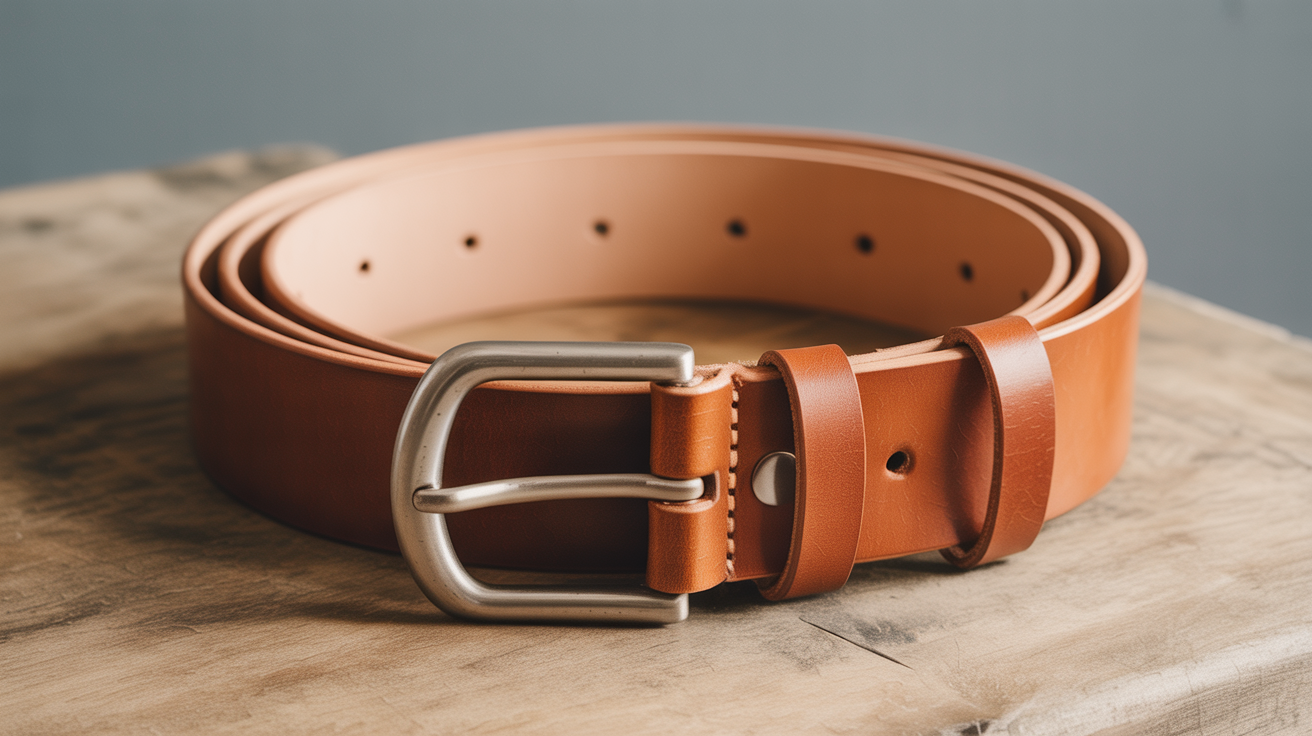
Making your own leather belt is one of the most satisfying beginner projects out there. You end up with something you wear every day, it uses a single strap of leather, and the skills you build (cutting straight lines, punching clean holes, finishing edges) carry over to almost every other leathercraft project.
Materials You'll Need
Before cutting anything, gather everything on this list. Working with incomplete materials mid-project is how mistakes happen.
Leather
- One strap of 8–10 oz (3.2–4.0 mm) vegetable-tanned leather, cut to belt width (typically 1 in / 25 mm, 1.25 in / 32 mm, or 1.5 in / 38 mm) and long enough for your length calculation (see below). Most suppliers sell pre-cut belt blanks, which saves a step.
Hardware
- One frame buckle (roller bar or solid brass) sized to your strap width
- Two Chicago screws (also called sex bolts) or two copper rivets, for attaching the buckle keeper if you make one
Tools
- Strap cutter or metal straightedge + utility knife with a fresh blade
- Cutting mat or marble slab
- Wing divider or scratch awl (for marking stitch or edge lines)
- Drive punch or rotary punch: 1/4 in / 6 mm for the buckle slot, and the size you want for adjustment holes (often 3/16 in / 5 mm)
- Maul or wooden mallet
- Slot punch or oblong punch in the appropriate size (for the buckle bar slot). You can also cut the slot with two round punches and a sharp knife.
- Edge beveler, size 2
- Swivel knife (optional, for decorative carving)
- Edge slicker or wood dowel
- Bone folder or spoon handle (for burnishing)
Finishing Supplies
- Leather dye (oil or alcohol-based) and a wool dauber. Test on scrap first.
- Edge finish: tokonole, beeswax, or gum tragacanth
- Leather conditioner or neatsfoot oil for the final surface coat
- Rubber gloves and a ventilated workspace when applying dye
How Long Should Your Belt Be?
This is the question beginners most often get wrong, and the logic is straightforward once you see it.
The rule: measure your waist at the position where you'll wear the belt (not your pants waist size, but actually measure around your body at that point), then add 10–12 in / 25–30 cm.
That extra length accounts for roughly 4 in / 10 cm of tail past the center hole, plus the buckle-end tuck through the buckle frame and back to the keeper, plus the keeper itself. If you are buying a pre-cut blank and cannot specify length, aim for a blank that measures about 20% longer than your pant size in inches, then verify against your actual waist measurement.
A finished belt blank of 50–52 in / 127–132 cm suits most adults wearing at their natural waist. Add a few inches if you wear the belt at the hips.
Step-by-Step: Making the Belt
Step 1: Cut Your Strap to Length
If you have a pre-cut blank, check the length against your measurement and trim the tail end (the pointed or finished end) to size. If you are cutting from a full side, use a strap cutter set to your desired width. Strap cutters track the leather edge and give a consistent width all the way down. Alternatively, clamp a metal straightedge along a pencil line and make multiple passes with a sharp utility knife. Dull blades tear rather than cut, so change the blade before you start.
Cut on a hard, flat surface. Leather compresses under the blade, and a soft cutting mat can let the knife wander.
Step 2: Prepare the Buckle End
The buckle end is the end that will thread through the buckle frame. It needs a rounded or angled tip so it feeds easily, and a slot for the buckle's roller bar.
Rounding the tip: use a strap-end punch if you have one (a half-round punch), or trace a coin, cut with scissors, and refine with a knife. Round the corners, not the center. The goal is a half-oval shape, not a full dome.
The buckle slot: measure 1 in / 25 mm from the very tip of the rounded end and mark the center of the strap. The slot should be about 1/4 in / 6 mm wide and long enough for the buckle bar, typically 1 in / 25 mm for a standard frame buckle. Punch two round holes 1 in / 25 mm apart, then connect them by cutting between the holes with a sharp knife, keeping a straightedge against the cuts to stay parallel. Clean up the slot edges with a knife tip or a small file.
Skiving (optional but recommended): the buckle end needs to fold back on itself, and thick veg-tan is stiff. Skiving means tapering the last 3 in / 75 mm of the flesh side (the rough underside) to about half the original thickness. Use a skiving knife or a sharp bench knife held at a low angle. Work gradually and test the bend as you go.
Step 3: Thread and Attach the Buckle
Fold the skived end through the buckle frame so the bar sits in the slot you punched, with the flesh sides facing each other. Pull the tail back against the strap until the buckle bar sits 3/8 in / 10 mm from the fold.
Now secure the fold. Two Chicago screws work well here: mark two points on the strap, one near each edge, through both layers. Punch with an awl or drive punch sized to the screw shaft diameter. Insert the Chicago screws from the grain side and tighten by hand, then snug them with a flat-head screwdriver. Rivets are an equally solid option; set them with a rivet setter and a backing block.
Step 4: Mark and Punch the Adjustment Holes
These are the holes the buckle pin sits in when you wear the belt. Mark the center line of the strap with a wing divider running along both edges, then decide on your spacing.
Standard spacing is 1 in / 25 mm between holes, and most belts have five. Start your first hole at the point that represents your actual waist measurement, measured from the inside of the buckle frame to the center of the hole. Add two holes at 1 in / 25 mm increments toward the tip, and two holes at 1 in / 25 mm increments toward the buckle end. That gives a 4 in / 100 mm range of adjustment.
Use a drive punch sized to your buckle pin, typically 3/16 in / 5 mm for standard hardware. Center the punch on your marks, hold it vertical, and strike once with a maul. A punch that wanders produces oval holes, so keep it plumb and commit to the strike.
Step 5: Shape and Bevel the Tip
The tail end of the belt gets a decorative tip. Common shapes include a straight cut with rounded corners, a pointed V-tip, or a fully rounded bullet end. Pick one and cut it before beveling the whole strap.
After shaping, run an edge beveler around both long edges and both ends of the entire strap. Beveling removes the sharp corners that would crack and peel when the edge finish wears. An edge beveler size 2 suits most 8–10 oz leather. Make a consistent, even pass and try not to stop mid-stroke.
Step 6: Dye the Belt
Work in a ventilated space and wear gloves. Leather dye can penetrate skin and is difficult to remove.
Apply dye with a wool dauber in smooth, overlapping strokes along the grain. Work quickly to avoid lap marks. Let the first coat dry for 15–20 minutes, then assess coverage. Most belts need two coats for an even tone. Avoid puddling dye in the adjustment holes; dab those out with a cotton swab.
For an antique or two-tone look, apply a darker finish dye into the punched holes and any tooled areas, wipe the high spots clean, and seal before the antique sets completely.
Step 7: Burnish and Finish the Edges
You can finish edges before dyeing or after; each has tradeoffs. Finishing after dyeing gives a cleaner look because the edge dye and body dye can be matched. Finishing before is easier because you can handle the leather freely without smearing wet dye.
Apply a small amount of tokonole or gum tragacanth to an edge with your finger, then rub briskly with a wood slicker or the back of a spoon. The friction heats the fibers and compacts them into a smooth, sealed surface. Work a few inches at a time. Multiple quick passes beat one slow one. Repeat on all edges, including the inside of the buckle slot and around each adjustment hole.
Step 8: Condition and Final Assembly
Once the dye has cured (overnight is ideal), apply a light coat of leather conditioner or neatsfoot oil to both surfaces. This replaces oils removed by the tanning and dyeing process, keeping the leather supple. Buff off any excess with a soft cloth.
Thread the belt through your pants loops and through the buckle to confirm the fit. Check that the buckle pin seats cleanly in each hole and that the keeper slides freely. The keeper is a loose loop of leather that holds the tail after it passes through the buckle. If you did not make a separate one, a simple strip of matching leather with two Chicago screws works fine.
For more ways to work with veg-tan leather on small projects, see our guides on making a leather card holder and making a simple leather wallet by hand. Both use the same edge-finishing techniques covered here.
Troubleshooting Common Problems
The belt feels stiff and won't flex. This is normal for new veg-tan. Wear it for a few days and it will break in. Applying neatsfoot oil and flexing the belt by hand speeds things up.
The edges are fuzzy even after burnishing. The tokonole may have dried before you finished rubbing. Work smaller sections and apply slightly more product. For very fibrous leather, a quick pass with 220-grit sandpaper before applying the finish helps.
The buckle slot has ragged edges. Try a sharp knife tip to trim any loose fibers, then apply a drop of edge finish and burnish with a wooden toothpick or a tightly rolled cloth.
If you enjoy the punching and finishing workflow here, it transfers directly to a leather keychain, which is a good project for practicing consistent hole spacing.
FAQ
What weight of leather is best for a beginner-made belt?
8–10 oz (3.2–4.0 mm) vegetable-tanned leather is the standard for belts. It is firm enough to hold its shape without a stiffener and supple enough to punch and finish without cracking. Chrome-tan leather is softer and easier to punch, but it does not develop the same patina over time and is harder to dye evenly at home.
Do I need a strap cutter, or can I cut by hand?
You can cut by hand with a metal straightedge and a utility knife, and many beginners do exactly that. A strap cutter makes the process faster and more consistent because it indexes off one edge of the leather. If you buy a pre-cut belt blank, you skip the cutting step entirely, which is a reasonable choice for a first project.
How many adjustment holes should a belt have?
Five holes spaced 1 in / 25 mm apart is the most common configuration, giving a 4 in / 100 mm range of adjustment. Some dress belts use seven holes; work belts sometimes use only three. The center hole of the five should correspond to your actual waist measurement.
Can I use a regular rotary punch instead of a drive punch?
A rotary punch (the pliers-style tool with a rotating wheel of punch sizes) works fine for this project and is inexpensive. Drive punches struck with a maul give cleaner edges on thicker leather, but for 8–10 oz veg-tan, a good rotary punch is adequate. Avoid using a nail or a screwdriver to make holes; the result will be irregular and the fibers around it may tear over time.
How long does it take to make a belt?
For a first belt, plan for 3–5 hours spread over two sessions: one for cutting, punching, and assembly, and a second after the dye has cured for edge finishing and conditioning. With practice, a plain belt comes together in under two hours.