How Much Does It Cost to Start Leathercraft?
How much does leathercraft cost? Expect $110–230 to get started. Here's what to buy first, what to skip, and where to save money.
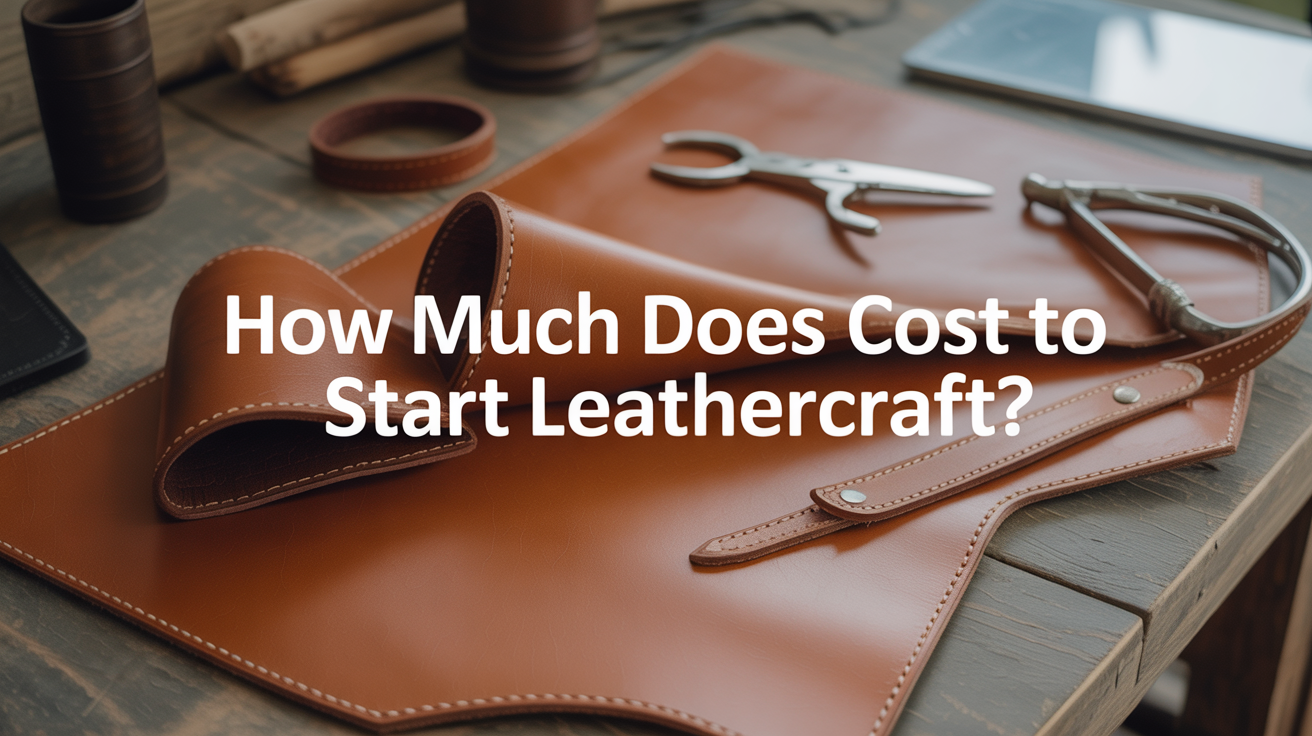
Getting into leathercraft costs somewhere between $110 and $230 for a genuine starter setup, enough to make wallets, key fobs, belts, or simple bags from scratch. That's not nothing, but it's also not the eye-watering buy-in that some hobby forums suggest.
The real variable is leather itself. Tools you buy once; leather you buy every project. Once you understand that split, the budget decisions get a lot simpler.
What You Actually Need to Buy First
Not every tool matters on day one. The list below is the realistic bare-bones kit for hand-stitched leatherwork, the style most beginners learn first because it needs no machines.
Core Hand Tools
These are the tools you'll reach for on every single project:
- Cutting knife or utility knife. A dedicated leather knife (Tandy, Craft Sha, Vergez-Blanchard) costs $15–35. A heavy-duty utility knife with fresh blades is $8–12 and works fine while you're learning.
- Self-healing cutting mat. A 12×18-inch mat runs $12–20. Skimping here hurts both your table and your blades.
- Metal ruler (18 in or longer). $8–15. Plastic deforms under a blade.
- Diamond chisels (pricking irons). Used to mark and punch stitch holes. A 2-prong and 4-prong set in 3.38mm or 4mm pitch costs $18–35. This is one tool worth spending a little more on since cheap chisels bend and skip.
- Harness needles. $5–10 for a pack of blunt-tipped needles. Saddle stitch uses two needles working from opposite ends.
- Waxed thread. $8–15 for a bobbin of linen or polyester thread. Ritza 25 (tiger thread) is the popular choice.
- Scratch awl. $6–12, useful for marking and tracing patterns.
- Edge beveler. $8–15. Rounds off cut edges so they don't fray or look raw.
- Bone folder. $5–10. Creases folds, burnishes edges, useful on virtually every project.
- Wooden or rawhide mallet. $12–25. You need one to drive chisels. A rubber mallet works but compresses the prongs differently; most people switch at some point.
- Contact cement or leather glue. $8–15 for a small tin or tube. Glue holds pieces together before stitching.
- Edge slicker or wood dowel. $6–14. Burnishes and seals edges with water or beeswax. A smooth hardwood dowel (3/8-inch) from a hardware store works fine as a substitute.
Bare-bones tool total: roughly $115–207.
In practice, buying a few things used or substituting (utility knife instead of a dedicated leather knife, dowel instead of a slicker) gets this closer to $80–140.
Leather
Leather is sold by the square foot or as named cuts. For a beginner:
- A piece of vegetable-tanned cow leather, 3–4 oz (1.2–1.6mm) for small goods, costs $20–45 for a few square feet from a craft store or online seller.
- A small shoulder or belly (5–8 sq ft) runs $30–60 for mid-grade vegetable tan, enough for multiple beginner projects.
- Pre-cut project panels (wallet-sized or belt blanks) are $8–20 each and remove the guesswork about how much to buy.
Budget $30–80 for your first leather purchase depending on how ambitiously you want to start.
Full Budget Breakdown
| Item | Rough Cost | Priority |
|---|---|---|
| Cutting knife or utility knife | $8–35 | Essential |
| Self-healing mat (12×18 in) | $12–20 | Essential |
| Metal ruler (18 in+) | $8–15 | Essential |
| Diamond chisels (2-prong + 4-prong set) | $18–35 | Essential |
| Harness needles (pack) | $5–10 | Essential |
| Waxed linen or polyester thread | $8–15 | Essential |
| Scratch awl | $6–12 | Essential |
| Edge beveler | $8–15 | Essential |
| Bone folder | $5–10 | Essential |
| Wooden or rawhide mallet | $12–25 | Essential |
| Contact cement | $8–15 | Essential |
| Edge slicker or dowel | $6–14 | Essential |
| Tools subtotal | $104–221 | |
| Vegetable-tan leather (first buy) | $30–80 | Essential |
| All-in beginner total | $134–301 | |
| Stitching pony | $25–60 | Nice-to-have |
| Swivel knife + stamps | $30–80 | Nice-to-have |
| Strap cutter | $20–45 | Nice-to-have |
| Leather dye or finish | $10–25 each | Nice-to-have |
A realistic working total, not going cheap on everything but not buying the premium version of each item, lands around $150–230 all-in for your first capable setup.
Where to Save vs. Where to Spend
Knowing where quality matters changes the buying calculus significantly.
Worth Spending More On
Diamond chisels are the tool beginners most often regret buying cheap. Low-cost chisels tend to have uneven prong spacing, dull tips, and weak steel that bends after a dozen uses. Spend $20–35 on a decent set from Craft Sha, KS Blade, or even the mid-tier Tandy range.
Thread also punches above its price. Ritza 25 or Fil au Chinois waxed linen cost a few dollars more than generic thread but last longer, resist fraying, and look noticeably cleaner in the finished work. The difference is visible immediately.
Leather quality matters more than any single tool. A project cut from clean, even-tempered vegetable tan will teach you more and look better than the same project in mystery-grade split leather. Budget toward leather before tools when you're deciding where to compromise.
Fine to Go Cheap On (At First)
The knife is replaceable. A fresh-bladed utility knife cuts leather well, and you can upgrade to a dedicated skiver or leather knife once you've built some feel for the craft. Same logic applies to the mallet: any dense wooden mallet works.
The cutting mat from a craft store is genuinely fine. There's no meaningful performance difference between a $15 mat and a $40 one for basic cutting.
A wood dowel from a hardware store works as an edge slicker. Hold it at an angle, add a drop of water, rub, and the edge burnishes. Upgrade to a proper slicker later if you want.
Pre-Cut Kits vs. Buying Tools Separately
Starter kits exist at multiple price points, and they're worth understanding before you commit.
$30–60 kits (common on Amazon) typically include a cutting mat, a few basic tools, and sometimes a small piece of leather. The tools in these kits are usually thin steel with soft edges, and the leather (if included) is often chrome-tan or bonded rather than vegetable tan. They'll get you through a project or two, but most of the tools need replacing quickly.
$80–130 kits from dedicated leather suppliers (Tandy Leather's beginner sets, for example) include better chisels and a more useful range of tools. The trade-off is that you get their choices, not yours, and you may end up with things you don't need.
Buying separately costs more up front in research time but gives you a set that actually fits your first projects. For hand-stitched small goods, the beginner tools guide covers exactly what's worth buying vs. what can wait.
If you're genuinely unsure whether leathercraft will stick, a mid-range kit is a lower-risk first step. If you're already committed, build your own list and you'll get more useful tools per dollar.
Is Leatherworking Expensive Long-Term?
The startup cost front-loads the spending. Once you own the core tools, ongoing costs are mostly leather and thread. A typical wallet project might use $8–15 in materials; a belt blank runs $15–30. Compared to hobbies that require consumables every session (resin casting, candle making, painting), leatherwork is relatively economical once you're past the first kit.
The hobby scales naturally. You can spend years doing excellent work with the beginner tools listed here. More advanced additions like a stitching pony, swivel knives and stamps, or a strap cutter for long clean cuts are genuine quality-of-life upgrades, not requirements. Add them when a project actually calls for them.
For a complete picture of what the craft involves before you buy anything, the complete beginner's guide to starting leathercraft covers materials, techniques, and realistic expectations.
FAQ
Can I start leathercraft for under $100?
Yes, if you already own a utility knife and a ruler. Buying the remaining essentials (mat, chisels, needles, thread, awl, beveler, bone folder, mallet, cement, slicker) runs $60–90, and a small piece of leather adds another $20–30. It's a lean kit, but entirely workable for first projects like key fobs, card holders, or a simple bookmark.
Is vegetable-tan leather worth the extra cost for beginners?
For most beginner projects, yes. Vegetable-tanned leather accepts tooling, burnishes cleanly, and makes it obvious when your cuts and stitches are clean or sloppy — useful feedback when you're learning. Chrome-tan leather is softer and more forgiving but doesn't burnish or tool the same way. Most traditional leathercraft tutorials assume vegetable tan, so matching your material to the instruction makes the learning curve gentler.
What's the biggest waste of money for a first-time buyer?
Carving and stamping tools before you've done any stitching. Sets of decorative stamps look appealing in photos but most beginners don't touch them for months, if ever. Learn cutting, stitching, and edge finishing first. Understanding what the craft actually takes can save you $40–80 on tools that sit in a drawer.
Do I need a stitching pony?
Not immediately. Many beginners clamp work in a notebook, use a binder clip, or hold it between their knees. A stitching pony (a floor or bench clamp that holds work at a comfortable angle) becomes genuinely useful once your projects get larger or you're doing longer seams. Budget for one after your first few completed projects, not before.
Where's the cheapest place to buy leather for beginners?
Tandy Leather stores (if there's one nearby) let you see and feel the leather before buying, which matters more than most beginners expect. For online, Springfield Leather and Rocky Mountain Leather are well-regarded for mid-grade vegetable tan at fair prices. eBay and Etsy have plenty of small sellers offering offcuts and remnants, useful for practice pieces at $5–15. Avoid mystery bundles unless you're buying purely for practice; the grade is unpredictable.