Leather Grades Explained: Full-Grain, Top-Grain, and Genuine
Learn what leather grades actually mean, how full-grain, top-grain, and genuine leather differ, and which to choose for your first project.
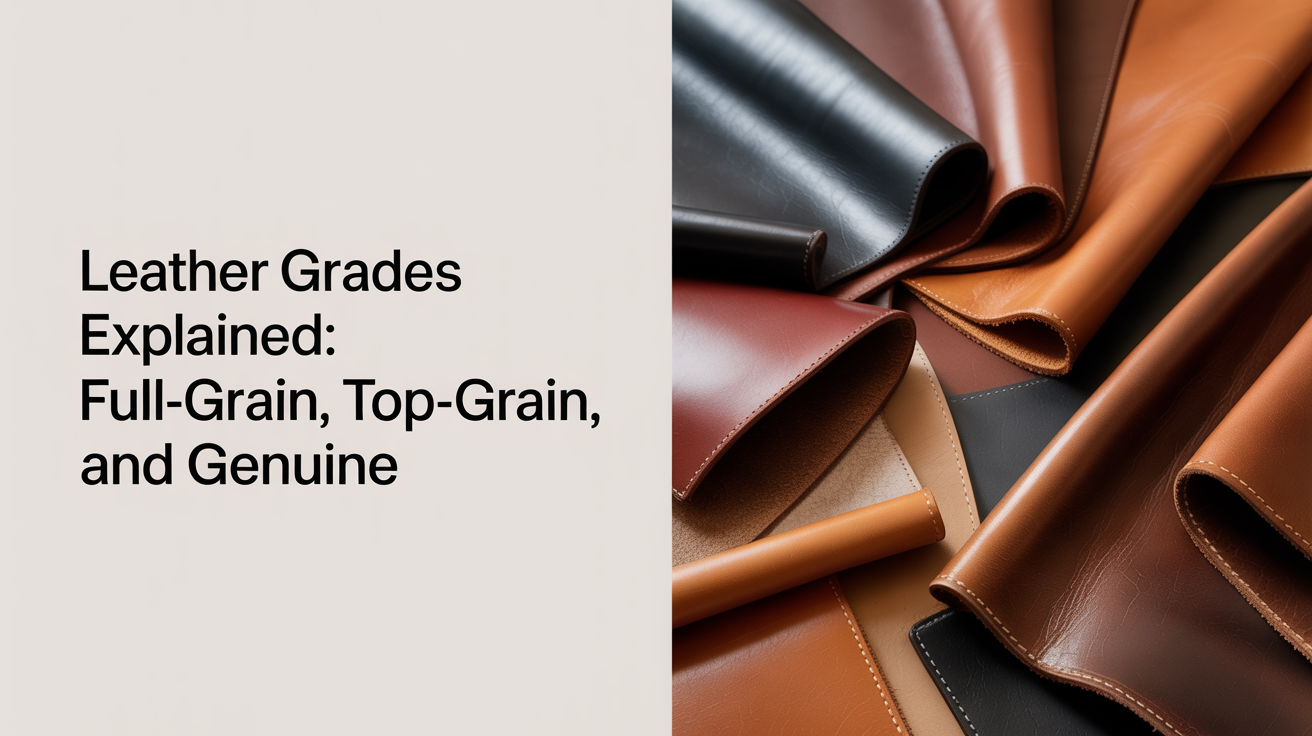
Walk into any leather supplier and you'll see terms like "full-grain," "top-grain," and "genuine" on every hide tag. These labels sound official, but the industry uses them loosely, and beginners often end up paying for the wrong leather or dismissing good hides based on a misread label. This guide explains what each grade actually means and how to pick the right one for the work you want to do.
How Cowhide Is Structured
Before the grades make sense, it helps to understand what you're slicing into. A raw hide has layers. The outermost layer is called the grain, and beneath it sits a tighter, denser zone before the fibrous flesh side opens up. When a tannery splits a thick hide to make multiple usable sheets, the layer that includes the natural grain surface stays on top. Everything below is a split.
The grade system essentially describes how much of that original grain surface is intact on the piece you're buying.
Full-Grain Leather
Full-grain is the entire grain layer, untouched. The tannery buffs off the hair and cleans the surface, but the natural texture, pores, and any small scars or insect marks remain visible. That surface is what gives full-grain its reputation: it's dense, takes dye evenly when prepared correctly, and develops a patina over years of handling.
For leathercraft, full-grain is the standard choice for any project that needs to hold up under real use, whether that's a wallet, a belt, or a bag strap. The tight fiber structure resists stretching and holds stitches well. It also burnishes cleanly at the edges.
The tradeoff is cost and availability. Full-grain hides are priced higher, and the visible grain can show natural variation that newer workers sometimes mistake for defects. Those marks are not flaws; they're part of working with an animal-sourced material. For more on reading a hide before you buy, see how to choose your first hide, sides, shoulders, and bellies.
Top-Grain Leather
Top-grain starts with the same grain layer but gets sanded or buffed to remove the surface variation. A tannery then applies a finish coat, sometimes pigmented, to create a uniform look. The result is a smooth, consistent surface that photographs well and feels refined.
Top-grain is thinner and more pliable than full-grain once finished, which makes it common in fashion goods and commercial upholstery. For beginners doing hand stitching or tooling, it presents a challenge: the finish coat can resist dyes and block tooling impressions unless you prep the surface first to open the grain. Edge burnishing can also be harder when the fiber structure has been disrupted by sanding.
That said, quality top-grain can be a practical choice for projects where a consistent, even color matters more than aged character. Just know that it will not develop a patina the same way full-grain does.
Genuine Leather
"Genuine leather" sounds like a quality assurance stamp. It is not. The term only means the product is made from real animal hide, not synthetic material. In practice, genuine leather usually refers to a split, the lower layer separated from the grain during hide processing.
Splits are real leather but they lack the dense grain structure that gives full-grain and top-grain their durability. They're often finished with heavy coatings, embossed with an artificial grain pattern, or bonded with polyurethane. The surface can look convincing, but splits fray at cut edges, don't burnish cleanly, and tend to peel over time when finished goods are flexed repeatedly.
For craft work, splits are generally not worth buying. A thin full-grain hide costs more up front but saves you frustration when your edges look ragged or your stitches pull through.
Bonded Leather
A brief note on bonded leather, since it shows up on budget supplies and some pre-made leather blanks. Bonded leather is shredded leather fiber mixed with adhesive and pressed onto a backing, then coated to look like hide. It has no usable grain, tears readily, and is not suitable for craft projects. If you see it listed as a supply option, skip it.
A Quick Comparison
| Grade | Grain Intact? | Surface Treatment | Craft Suitability |
|---|---|---|---|
| Full-grain | Yes, natural | Minimal to none | Excellent |
| Top-grain | Sanded off | Heavy finish coat | Moderate (check prep) |
| Genuine / split | No grain layer | Embossed or coated | Poor for hand work |
| Bonded | None | Synthetic coating | Avoid |
Matching Grade to Project
For most beginner projects, start with full-grain vegetable-tanned leather. It responds well to tooling, takes dye reliably, and teaches you what leather is supposed to feel and behave like. The tanning process affects this as much as the grade does, so it's worth reading vegetable-tanned vs chrome-tanned leather and what the difference means before you order.
Thickness matters just as much as grade when you're fitting leather to a specific project. A bifold wallet needs a different weight than a belt or a bag bottom. For that, see leather weights and thicknesses explained for beginners.
Frequently Asked Questions
Is full-grain leather worth the extra cost for a beginner's first project? Yes, for most projects. Full-grain teaches you how leather is supposed to cut, stitch, and burnish. If you learn on a split or heavily finished hide, you may develop workarounds for problems that don't exist in proper full-grain. The cost difference on a small first project is usually less than the cost of redoing it in better leather later.
What does "genuine leather" mean on a commercial product? Only that it contains real animal hide somewhere in its construction. It says nothing about which layer, how it was processed, or how it will hold up. On finished goods, genuine leather often refers to bonded or split material with a surface coating. As a buying term, it is not a quality indicator.
Can I tool or carve top-grain leather? It depends on the finish. Some top-grain hides have a light finish that can be dampened and removed enough to accept tooling. Others have a bonded or lacquered coating that will crack under the swivel knife. The safest approach is to test on a scrap, case it with water, and see if the surface stays intact and the impression holds cleanly.
Why does my leather have marks and inconsistencies if it's labeled full-grain? Because full-grain preserves the natural surface of the hide, including healed scars, stretch marks, and insect bites. These are not defects. They indicate an unaltered grain layer. Perfectly uniform surface on a "full-grain" hide often signals a finish coat, which means you may be looking at top-grain regardless of the label.
Where should a beginner buy their first full-grain leather? Look for a leather supplier that lists the tannage (vegetable or chrome) and origin alongside the grade. Reputable suppliers will let you buy a small piece or offcut before committing to a full side. Avoid buying leather described only as "genuine" or "real" without further detail, especially from general retail sites where leather terms are often used interchangeably.