Gum Tragacanth vs Tokonole: Which Edge Slicker to Use
Gum tragacanth vs Tokonole compared for leather edge finishing: how each works, which gives a better result, and which to buy first.
Both gum tragacanth and Tokonole will give you a burnished, smooth leather edge. The question is which one suits your leather, your workflow, and what's sitting on the shelf at your local supplier. Here's a direct comparison so you can make that call without guessing.
At a Glance
- Gum tragacanth is a natural plant gum that soaks into the leather fiber, giving a matte to low-satin finish.
- Tokonole is a CMC-and-wax paste that sits closer to the surface, giving a satin to near-mirror finish with less product per pass.
- Both require vegetable-tanned leather; neither works on chrome-tan or heavily finished leather.
- Tokonole doubles as a flesh-side slicker before assembly, which gum tragacanth is rarely used for.
- Bevel and sand the edge before applying either product; no slicker fixes an uneven edge.
- For a first purchase, Tokonole's forgiveness and visible feedback make it the easier starting point.
What Each Product Actually Is
Understanding the chemistry helps you predict how each product behaves on your leather.
Gum Tragacanth
Gum tragacanth is a natural gum, dried and ground from the sap of Astragalus shrubs native to the Middle East. According to Wikipedia's entry on tragacanth, it's "a viscous, odorless, tasteless, water-soluble mixture of polysaccharides" extracted from the plant's roots and dried into ribbons or flakes before being ground to powder. The same gum shows up well outside leatherwork: it's a registered food additive (E413) used to thicken sauces and confectionery, and it's been used historically to bind artists' pastels and as a mucilage for herbal remedies.
You dissolve the powder in water (or buy it pre-mixed as a liquid) and end up with a thin, slightly syrupy compound. It soaks into the fibres of veg-tan leather rather than sitting on top, which is why it works differently from a wax or synthetic burnishing compound.
The finish it produces is matte to low-satin. Edges feel tight and smooth but don't have a glassy sheen. That's often the look traditional leatherworkers prefer, and it photographs well on natural veg-tan.
Tokonole
Tokonole is a Japanese product made by Seiwa Leather. It's a thicker paste (roughly the consistency of a light hair gel) built around carboxymethyl cellulose (CMC) with a wax component blended in. CMC is the same family of compound used as a thickener in foods and cosmetics (registered as E466), valued industrially for being "nontoxic" and having "high viscosity" while forming a smooth, workable film, which is essentially what it's doing on the surface of your leather edge. Tokonole was originally designed to slick the rough flesh side of leather before assembly (to reduce fraying and drag), but most crafters now reach for it as their primary edge finisher.
The finish is glossier than gum tragacanth: anywhere from a satin sheen to a near-mirror shine depending on how much friction you apply. A small amount covers a surprising length of edge; a 100 g jar will last the average hobbyist well over a year of regular projects.
How to Apply Each One
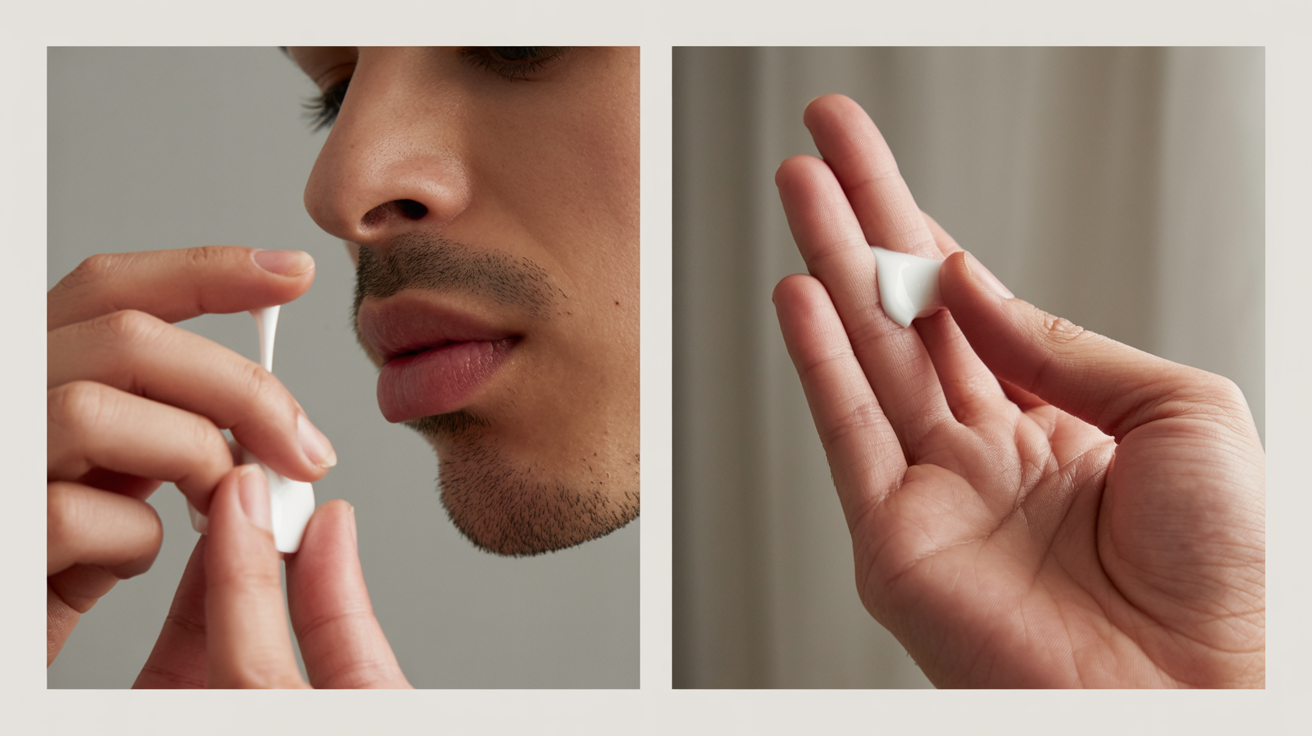
The application sequence is nearly identical for both products, which makes it easy to switch between them.
Beveling and Sanding First
Neither product hides an uneven edge. Before reaching for any slicker:
- Bevel the top and bottom corners of the edge with an edge beveler (size 1 or 2 for most straps).
- Sand through 120, 220, then 400 grit if you want a very clean finish.
- Wipe off any dust.
Applying Gum Tragacanth
Apply a thin coat with a cotton swab, scrap leather, or your fingertip. Let it sit for about 30 seconds until it starts to feel tacky rather than wet, then work the edge briskly with a wooden or canvas slicker, a piece of heavy canvas, or the shank of a smooth tool. The friction heats the fibres and the gum together, sealing them down.
You can apply a second coat once the first is fully dry and repeat the slicking process for a tighter finish. More coats means more build-up and a slightly richer satin.
Applying Tokonole
Use even less than you think. Dip a fingertip or cotton swab into the jar, wipe a small amount onto the edge, and work it in immediately with a slicker or piece of canvas. The CMC grabs quickly, so don't let it dry before you start burnishing. Once it's worked in you'll see the edge start to compact and shine under friction.
For flesh-side slicking, spread a thin layer across the whole back surface of your cut piece before assembly, then rub it with a smooth glass or wooden tool until the fibres lie flat.
Head-to-Head Comparison
| Feature | Gum Tragacanth | Tokonole |
|---|---|---|
| Consistency | Thin liquid | Thick paste |
| Finish level | Matte to low-satin | Satin to glossy |
| Absorbs into leather | Yes, soaks in | Partially; more surface action |
| Flesh-side slicking | Rarely used this way | Yes, primary use case |
| Amount needed per project | A little more than Tokonole | Very small amount |
| Availability | Craft & leather shops; some art supply | Widely available online; less so in shops |
| Price | Low (powder DIY is cheapest) | Moderate (~$10 to $15 for 100 g) |
| Works on chrome-tan? | No; won't burnish | No; won't burnish properly |
| Learning curve | Low | Very low |
| Traditional / aesthetic | Classic, natural-look | Modern, polished |
Both products require vegetable-tanned leather. If your leather is chrome-tanned or has a heavy surface finish, neither will give you a proper burnish; you'd need a painted edge finish instead.
A Worked Example: One Wallet's Worth of Edge
To put the "very small amount" claim in real terms, a typical bifold wallet has roughly 60 to 80 cm of exposed edge once you add up the perimeter, card slots, and pockets. Burnishing that with Tokonole uses about a pea-sized dab, maybe 0.3 to 0.5 g. At that rate a 100 g jar covers somewhere around 200 to 300 wallet-sized projects before it runs out, which is why most hobbyists never finish a jar before it's several years old. Gum tragacanth, applied slightly more generously because it needs to soak rather than just coat, runs closer to double that per project but is also cheaper per gram, especially if you buy the powder and mix your own.
Other Options Worth Knowing
Gum trag and Tokonole dominate beginner conversations, but two other products come up often enough to mention.
Beeswax is the oldest edge finisher. Run the edge across a block of natural beeswax, then use heat (a bone folder warmed in your hand, a hair dryer on low, or a wooden slicker with friction) to melt it into the fibres. The result is a matte, protective finish. Beeswax is inexpensive and extremely shelf-stable, but it takes more effort to get a clean look than either of the wet slickers.
Saddle soap occasionally gets recommended for edges, but it's primarily a leather conditioner and cleaner. It will soften and compress fibres slightly, but it doesn't build the kind of finish that a proper slicker does. Don't bother using it as a dedicated edge product.
If you want to go deeper on what happens after your edge is finished, how to burnish leather edges until they shine covers the full mechanics of the burnishing step, including slicker shapes and heat techniques.
Which Should a Beginner Buy?
Start with Tokonole. It's more forgiving, requires less product per pass, handles both edge finishing and flesh-side slicking, and is harder to over-apply. The glossier finish also gives you clear visual feedback that you're making progress, which matters when you're learning.
Gum tragacanth is worth picking up once you've got a few projects under your belt. The matte finish is often a better match for natural-dyed pieces, and working with it teaches you more about how leather fibres actually respond to moisture and friction. If you plan to dye your edges before finishing, read through how to dye leather: a beginner's guide before you decide on a finishing sequence, since edge dye needs to go on before the slicker.
The practical answer: buy a small jar of Tokonole for your first several projects. If you find yourself wanting a less shiny result or you're mixing your own products, pick up gum tragacanth powder, which is cheap and keeps indefinitely. Most crafters end up with both. Neither product is a solvent-based finish, so unlike alcohol dyes or contact cement, you don't need special ventilation to work with them, which is one more reason they're a good place to start.
For advice on keeping dye uniform on larger pieces before you seal the edges, how to get an even leather dye job with no streaks is a useful read alongside this one.
FAQ
Can I use Tokonole on the flesh side of every leather project?
It works on veg-tan and some lightly finished leathers. Chrome-tan, suede, and heavily coated leathers won't respond properly. If you're unsure, test on a scrap first. The product should absorb slightly and the fibres should lie down under a slicker.
Does it matter which order I finish the edge vs. dye the leather?
Yes. Dye your edges first (after sanding but before slicking). The slicker seals the surface fibres, which limits how well dye penetrates. Slick, then apply any protective topcoat last.
How long does Tokonole last once opened?
Most crafters report two to three years with no issues if the lid is kept on. Keep it away from direct heat and it should remain usable until the jar is empty.
My edge still looks fuzzy after burnishing. What am I doing wrong?
Most likely causes: the leather is chrome-tanned (neither product works on it), you applied too much product and drowned the fibres, or you didn't sand before slicking. Work through the prep steps again. A finely sanded edge before any slicker makes a noticeable difference.
Can I mix gum tragacanth and Tokonole?
There's no good reason to. They perform differently because of their different chemistries. Use one or the other on a given edge, apply a second coat of the same product if needed, and you'll get a cleaner result than blending the two.
Is gum tragacanth food-safe, and does that matter for leatherwork?
It's approved as a food additive under the E413 designation, which is worth knowing if a stray fleck ends up on your hands, but it's not a reason to choose it over Tokonole for leatherwork. Neither product is something you want to ingest deliberately, and food-safety approval says nothing about how well a compound burnishes an edge. Pick between them based on finish and workflow, not on which one happens to also appear in a food ingredient list.
Which one should I use if I'm burnishing a very thick belt edge (8 to 10 oz)?
Gum tragacanth tends to work better on heavier leather because it soaks into a deeper edge profile rather than sitting mostly on the surface. On thick belt blanks, apply it in two thin coats rather than one heavier one, and expect to spend more time slicking than you would on a 3 oz wallet edge. Tokonole still works on thick leather, but you'll likely need a second pass to get the same depth of shine you'd see on a thinner edge.