How to Dye Leather: A Beginner's Guide
Learn how to dye leather at home with step-by-step prep, dye types, application techniques, and finishing tips for beginners.
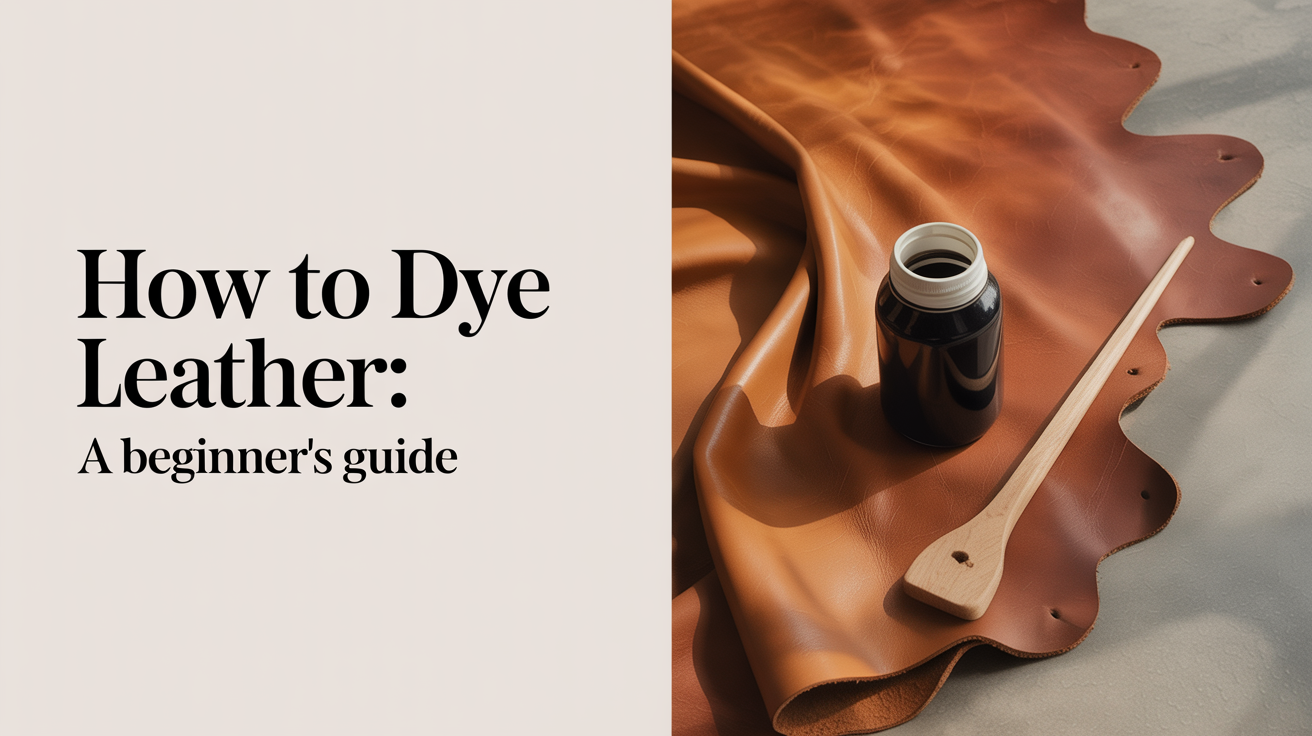
Dyeing leather is one of the most satisfying milestones in leathercraft: a raw, pale vegetable-tan hide goes from blank canvas to a rich, personalised piece in an afternoon. The process is straightforward once you understand why each step exists.
At a Glance
- Deglaze before you dye. Skipping this step is the single biggest cause of blotchy results.
- Alcohol-based dyes are the most predictable choice for a first project on vegetable-tanned leather.
- Apply thin coats in overlapping circular strokes; three light coats beat one heavy one almost every time.
- Condition with a light coat of neatsfoot oil after dyeing but before sealing, and don't overdo it.
- Seal with an acrylic finish like Resolene for durability, or a wax finish for a softer, lower-sheen look.
- Work in a ventilated space; alcohol- and oil-based dyes give off solvent fumes that build up fast in a closed room.
What You Need Before You Start
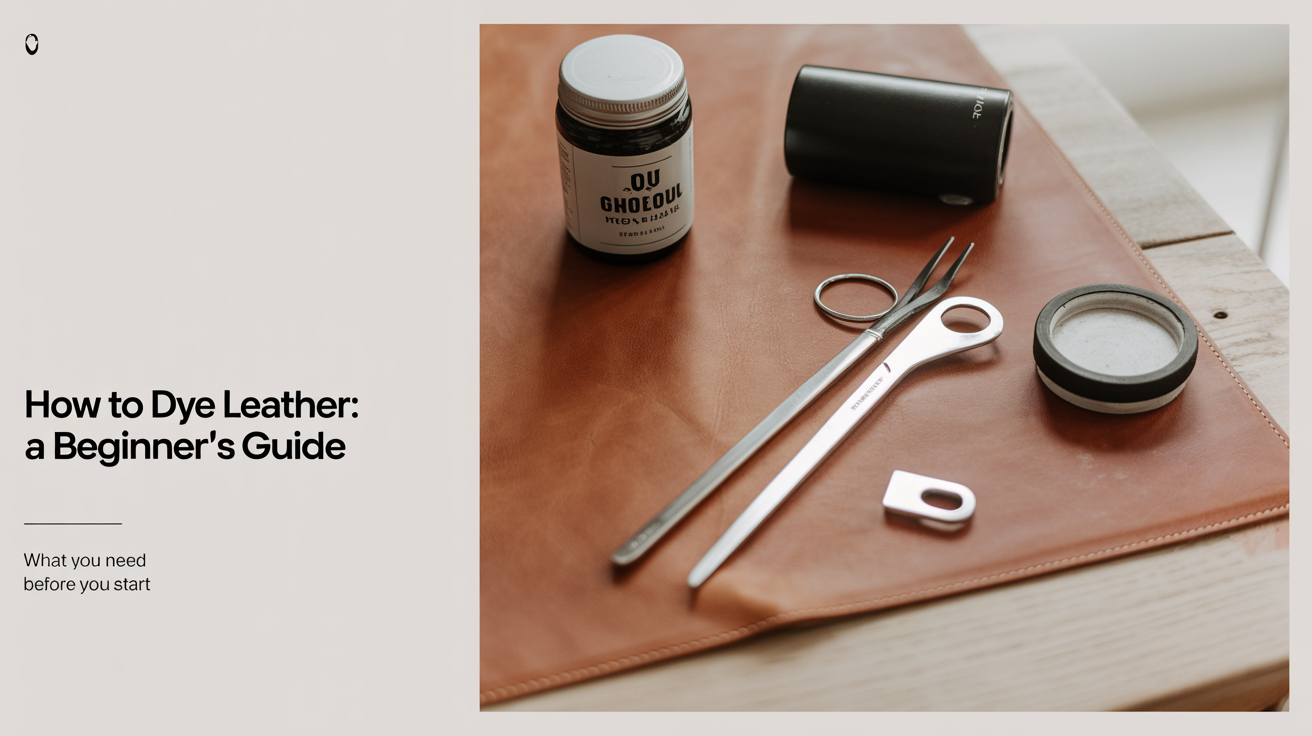
Gathering your materials in advance keeps you from scrambling mid-project with dye-stained gloves.
Dye options
Three main dye families are used in leatherwork, and picking the right one for your project matters more than picking the "best" one in the abstract:
| Dye Type | Penetration | Dry Time | Best For | Watch Out For |
|---|---|---|---|---|
| Alcohol-based (spirit dye) | Deepest | 5 to 10 min/coat | First projects, intense transparent color | Strong solvent smell, needs ventilation |
| Water-based | Shallower, sits nearer the surface | 20 to 30 min/coat | Beginners wanting more working time, lower VOCs | Can raise the grain slightly |
| Oil dye | Deep, alcohol-based carrier | 10 to 15 min/coat | One-step color + conditioning | Built-in oil can interfere with topcoat adhesion |
Fiebing's Pro Dye and Eco-Flo Spirit Dye are common alcohol-based choices. For your first project, an alcohol-based dye on vegetable-tan is the most predictable combination: it's what most published techniques and forum troubleshooting assume, so when something goes wrong you'll find the most help.
Application tools
| Tool | Best for | Notes |
|---|---|---|
| Wool dauber | Small to medium pieces | Holds a lot of dye; easy to reload |
| Sponge or foam pad | Large flat surfaces | Faster coverage; watch for pooling |
| Horsehair brush | Detailed edges and tooled areas | Gets into recessed lines |
| Airbrush | Large or graduated effects | Steeper learning curve; use a respirator |
| Dip-dyeing container | Full immersion of small pieces | Fastest but uses the most dye |
Safety supplies
Nitrile gloves are non-negotiable. Leather dye stains skin for days and many alcohol-based dyes contain solvents. The EPA's guidance on volatile organic compounds lists craft and hobby products, including glues and finishes, among common indoor VOC sources, and specifically recommends increasing ventilation when using products that emit them. Work in a ventilated space, ideally outdoors or with a window open, especially with alcohol-based or oil dyes. Keep paper towels and a dedicated rag nearby for blotting.
Preparing the Leather
Skipping prep is the fastest way to get a blotchy, uneven result. Leather straight from the store has surface oils, wax residue from the tannery, and sometimes a finish that blocks dye penetration.
Deglazing
Deglaze the surface with either oxalic acid solution (sold as "leather preparer" by most suppliers) or plain denatured alcohol on a clean cloth. Both remove surface oils and open the leather's pores. Wipe in even strokes and let it dry fully, which takes about 10 to 15 minutes at room temperature (20°C / 68°F or above). You'll notice the leather looks lighter and slightly matte when it's ready.
Do not skip this on chrome-tan leather. Chrome-tan has a denser surface that resists dye more than veg-tan, and deglazing makes a measurable difference.
Test on scrap
Always test your dye on a scrap of the same leather before touching your actual piece. Dye reacts differently depending on the hide, the tannage, the humidity, and how much deglazer you used. A small test gives you a feel for how fast the colour builds and whether you need one coat or three. Let the test scrap sit for a full 24 hours before judging the final shade; leather dye typically looks a shade or two darker wet than it settles once fully dry.
Applying the Dye
Even coats and circular motion
Load your wool dauber or sponge lightly. Too much dye on the tool at once causes blotches and drips. Apply in small, overlapping circular motions and work a section at a time rather than trying to cover the whole piece in one pass. Circular motion keeps the dye moving before it sets, which prevents tide marks.
Let each coat dry completely before adding another. With alcohol-based dyes, this is usually 5 to 10 minutes. With water-based dyes, allow 20 to 30 minutes. Three thin coats almost always look better than one heavy coat: the first coat typically looks patchy and inconsistent by itself, the second evens it out, and the third deepens and locks in the tone. Stopping after one coat is the most common reason beginners end up disappointed with a "washed out" result.
For an even more consistent result, see our detailed breakdown of how to get an even leather dye job with no streaks.
Working the edges
Edges need attention. Run your dauber or a small brush along all cut edges after the faces are done, or dye will visibly stop at the perimeter. For pieces you plan to burnish later, dye the edges first so the burnishing process locks the colour in. If you haven't tackled edge finishing yet, our guide on how to burnish leather edges until they shine covers the full process.
Dip dyeing
For small items like key fobs or buckle straps, dipping gives perfectly even saturation. Fill a container deep enough to submerge the piece, dip it slowly, hold it under for 30 to 60 seconds, then lift and hang it to drip-dry. Dip twice for a deeper colour. Hang the piece so air circulates on all sides; lying flat can cause uneven drying marks.
After the Dye Dries
Buffing off excess
Once the final coat is dry, buff the surface with a clean, dry cloth using firm circular strokes. This removes any loose dye residue sitting on the surface. If the cloth picks up heavy colour after the dye has fully dried, you either didn't deglaze thoroughly or you applied too many coats too quickly. It's not a disaster, just buff more until the transfer stops.
Conditioning with neatsfoot oil
Alcohol-based dyes strip some moisture from the leather as they dry. Neatsfoot oil is rendered from cattle shin bones and feet and has been used for generations as "a conditioning, softening and preservative agent for leather." After buffing, apply a thin coat with your fingers or a cloth and let it soak in for 30 minutes. The leather will darken slightly and feel supple again.
Don't overdo it. One light application is enough; excess oil softens the leather more than you may want for structured pieces, and repeated heavy oiling over the life of a piece can cause a separate problem. The National Park Service's conservation guidance on leather notes that repeated dressing can produce "fatty acid spew," a waxy white bloom that forms when excess oil migrates to the surface over time and "can never be removed fully and safely" once it sets in. That's a museum-collections concern more than a weekend-project one, but it's a good reason to treat neatsfoot oil as a light finishing touch rather than something to reapply liberally every few months out of habit.
Sealing the Dye
A topcoat protects the dye from rubbing off on skin or fabric, helps the colour stay consistent in use, and gives you control over the final sheen.
Resolene (acrylic)
Resolene is one of the most popular water-based acrylic finishes for dyed leather. It goes on milky and dries clear to a light gloss. Dilute it 50/50 with water for the first coat, then apply a second coat undiluted after that one dries. Two coats give good rub resistance without making the leather feel plastic.
Wax finishes
Leather wax (beeswax-based conditioner or a product like Leather Balm) gives a more natural, low-gloss result. It's less durable than acrylic for items that see a lot of friction, but excellent for wallets, journals, and decorative pieces. Apply a thin layer, let it haze, and buff with a soft cloth.
Matte vs gloss
If you want a matte finish over an acrylic topcoat, add a small amount of matte medium to your resolene before the final coat. For very high gloss, burnish the sealed surface lightly with a smooth bone folder after the acrylic cures overnight.
Common Beginner Mistakes
- Skipping the deglazing step. The number one cause of patchy dye.
- Applying dye to damp leather. The leather should be completely dry after deglazing.
- Using too much dye per stroke. Light, controlled coats are always better.
- Not oiling before sealing. Sealing dry, stiff leather locks in that brittleness.
- Touching the dyed surface before it's sealed. Undyed hands and undried leather are a bad combination.
- Judging the final colour while it's still wet. Give the piece a full day before deciding you need another coat; wet dye reads darker than the cured result.
FAQ
Can I dye chrome-tan leather the same way?
Yes, but chrome-tan absorbs dye less readily than vegetable-tan. Deglazing is more important, and you'll likely need more coats. The colours tend to look slightly different on chrome-tan as well: less transparent, sometimes a touch more muted.
Do I need to apply a topcoat?
Technically no, but practically yes. Without a sealer, the dye will transfer to anything the leather touches, especially in the first few weeks. Even one coat of resolene makes a significant difference in colour fastness.
How do I get a two-tone or antique effect?
Apply a lighter base dye first, let it fully cure, then apply a darker dye and immediately wipe most of it off with a damp cloth. The darker colour stays in recesses and tooled impressions while the high points stay lighter. This is easier to control on tooled or embossed pieces than on flat ones. A dedicated antiquing gel gives you more control over this effect than dye if you want to push it further.
What's the difference between oil dye and regular alcohol dye?
Oil dyes have a conditioning agent already mixed in, so they simultaneously colour and condition the leather in one step. The trade-off is that the added oil can make the surface slightly harder to seal cleanly, and you can't control the conditioning separately. Standard alcohol dyes give you more control: dye first, condition to your preference, then seal.
Can I dye over an existing finish?
Only if you first strip the old finish with deglazer or acetone. Trying to dye over a sealed surface usually results in the dye sitting on top and peeling rather than penetrating. For older pieces, test a corner first to see how much finish is present before committing to a full re-dye.
How much dye do I actually need for a typical project?
For a small item like a wallet or key fob, a 4 oz bottle of dye covers dozens of projects; for a full bag panel or a belt blank, expect to use noticeably more per coat since you're covering a larger, continuous surface. Buying the smallest bottle of a colour you're unsure about and a larger bottle of a colour you use often (black and dark brown, typically) is the more economical approach than guessing on quantity upfront.
My leather feels stiff and brittle after dyeing and sealing. Did I ruin it?
Probably not permanently. This is almost always a missed or too-light conditioning step: the alcohol in the dye pulled moisture and natural oils out of the fibres, and the topcoat then locked in that dry state. Apply a light coat of neatsfoot oil or a leather conditioner now, let it absorb overnight, and the leather should soften noticeably. If it's still stiff after that, the leather was likely over-dried during the deglazing step rather than by the dye itself.